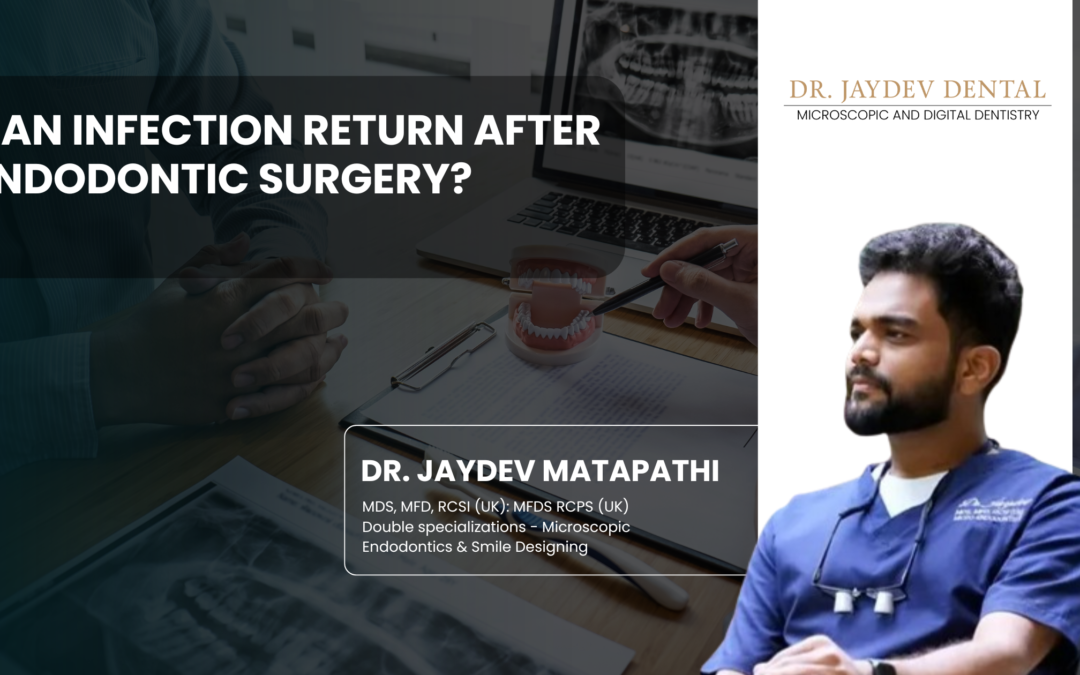
Yes, infection can return after endodontic surgery, such as an apicoectomy, or even after standard root canal treatment. Although these procedures have high success rates, often ranging from 85% to 98%, bacteria may persist or re-enter the tooth structure over time.
According to Dr. Jaydev Matapathi, a seasoned Smile design specialist in Hyderabad, “Long-term success in endodontic surgery depends on eliminating hidden bacteria, sealing the tooth effectively, and monitoring healing through structured follow-up care.”
Why Can Infection Return After Endodontic Surgery?
Reinfection is uncommon but can occur due to biological or structural factors.
Complex Root Anatomy:- Microscopic accessory canals or severely curved roots may harbor bacteria that are difficult to fully clean, even with surgical access.
Compromised Tooth Seals:- Delayed, loose, or cracked crowns and fillings can allow saliva and bacteria to leak back into the treated area.
New Tooth Damage:- Hairline fractures or fresh tooth decay can create new pathways for bacterial entry, sometimes years after treatment.
Resistant Bacterial Strains: Certain bacteria, such as Enterococcus faecalis, are resistant to conventional disinfectants.
Warning Signs of Reinfection After Endodontic Surgery
Early detection is critical to prevent further complications.
Persistent Pain:- Throbbing discomfort or pain during chewing that continues beyond the normal healing period (usually 3–7 days).
Visible Swelling:- Redness or puffiness in the gums, jaw, or face near the treated tooth.
Gum Boil (Fistula):- A pimple-like bump on the gum that may intermittently release pus.
Bad Taste or Odor:- A lingering foul taste or smell caused by bacterial drainage.
Treatment Options for Reinfected Teeth
Management depends on the severity of reinfection and tooth condition.
Endodontic Retreatment :- The tooth is reopened, old filling material is removed, canals are disinfected, and resealed.
Apicoectomy (Root-End Surgery):- If retreatment is unsuccessful, the infected root tip and surrounding tissue are surgically removed and sealed.
Medications:- Antibiotics may help control swelling or spread, but cannot eliminate bacteria trapped inside the tooth.
Tooth Extraction:- In severely compromised cases, extraction may be required, followed by replacement with a dental implant or bridge.
Why Choose Jaydev Dental Clinic for Endodontic Surgery?
Jaydev Dental Clinic follows a patient-centric, evidence-based approach to endodontic care. Advanced imaging, infection assessment, evaluation of root anatomy, and modern microsurgical protocols are used to reduce the risk of reinfection. Conservative tooth-preserving techniques and structured post-treatment follow-ups help support long-term oral health and stability.
Frequently Asked Questions
Is reinfection common after endodontic surgery?
No, reinfection is rare when modern techniques and proper sealing are used.
How long after surgery can reinfection occur?
It may occur months or even years later if new decay, fractures, or leakage develop.
Can antibiotics cure reinfection permanently?
No, antibiotics only manage symptoms and cannot remove bacteria sealed inside the tooth.
What should I do if I notice symptoms?
Consult an endodontist promptly to prevent bone loss or spread of infection.