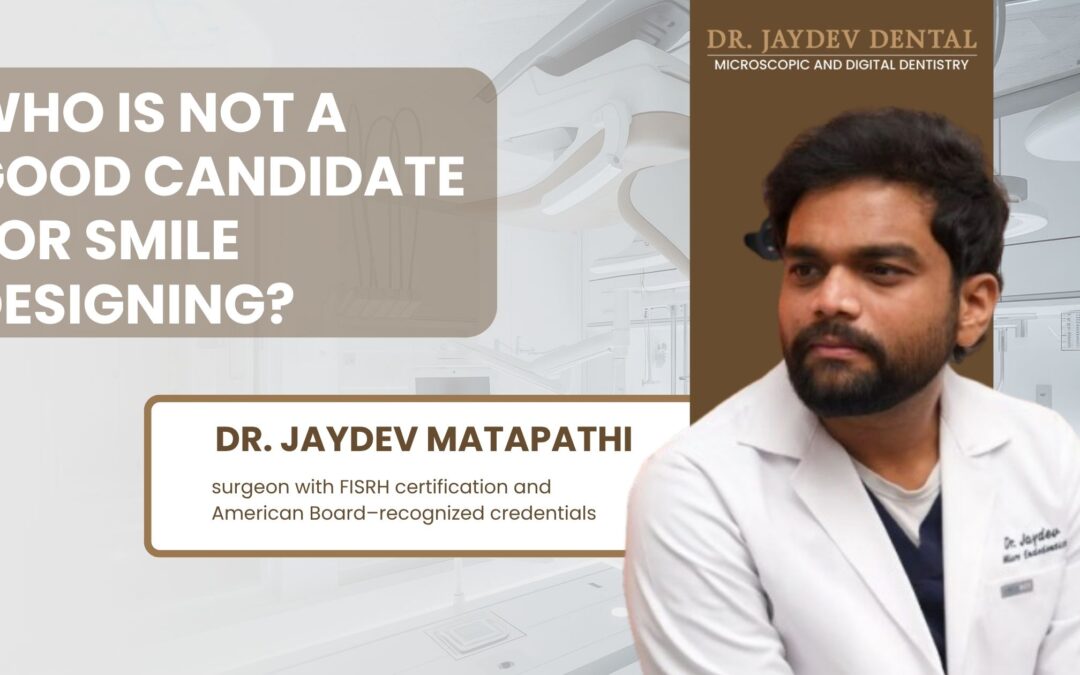
Not everyone is a good candidate for smile designing. Patients with active gum disease, untreated decay, severe bone loss, uncontrolled bruxism, or a significantly misaligned bite get excluded until those problems are handled. Full stop. Cosmetic restorations put on a shaky oral health foundation don’t last they fail, they crack, and the patient ends up paying twice.
According to Dr. Jaydev, an experienced smile design specialist in Hyderabad, Patients with active gum infection, heavy grinding habits, or unresolved decay aren’t suitable for smile designing until those conditions are properly managed.
Common disqualifiers include: gum disease, tooth decay, bone loss, bruxism, uncontrolled diabetes, and active orthodontic treatment.
Still unsure if your teeth are in shape for cosmetic work?
Who Gets Ruled Out During a Smile Design Consultation?
Most people assume the dentist just checks what your teeth look like. That’s not how it works.
- Gum Disease: Periodontitis or even persistent gingivitis stops the process cold, because bonding veneers or crowns to inflamed, bleeding tissue means poor adhesion, gum recession, and a cosmetic result that unravels far quicker than it should.
- Active Decay: Any cavity even a small one needs to be properly restored before cosmetic work goes near that tooth, since enamel that’s already breaking down won’t hold a veneer for long, and you’ll be back at the clinic within months instead of years.
- Bone Loss: When alveolar bone loss is significant, the teeth themselves become less stable, and stacking cosmetic restorations on top of that instability just doesn’t survive daily chewing pressure the way it needs to.
- Heavy Grinding: Bruxism without a solid management plan chips porcelain, sometimes fast patients who grind heavily and skip a night guard routine often fracture their veneers within the first year and don’t understand why.
But it’s not just those four. A bite that’s off in a functional way, not just visually, also has to be corrected before any smile design plan gets drawn up.
A proper smile designing consultation is really the only honest way to find out if your mouth is ready for cosmetic treatment right now, or if something needs sorting first.
What Other Factors Make Someone a Poor Smile Design Candidate?
Some disqualifiers don’t come from the teeth at all they come from lifestyle, systemic health, or simply where a patient is in life.
- Smoking: Gum healing slows down considerably with nicotine in the picture, infection risk around bonded restorations goes up, and veneers stain much faster than they would in a non-smoker, so the results simply don’t hold up the same way over time.
- Uncontrolled Diabetes: Blood sugar that isn’t properly managed interferes with tissue healing and can cause unpredictable gum responses around cemented restorations, which is why no responsible clinician proceeds without confirmed diabetic control.
- Teenagers: Jaws and teeth are still shifting in patients under 18, so permanent veneers placed now will likely mismatch within a couple of years as the dentition keeps moving it’s not age discrimination, it’s just biology.
- Patients Who Want the Impossible: Worth saying directly if what a patient wants doesn’t fit their facial structure, tooth proportions, or skeletal anatomy, no amount of technical skill makes that result satisfying. Good clinicians flag this in the consultation rather than taking the case anyway.
Candidacy is always a clinical judgment. The dentist decides, not the patient, and the assessment is what makes that clear.
Our dental treatment blog covers more on what happens during a proper pre-cosmetic evaluation.
Why do patients choose Dr. Jaydev Dental?
Dr. Jaydev trained in the UK as an endodontist and has spent years treating complex cosmetic and restorative cases for celebrities, international patients, and high-profile clients who had already been through failed treatment elsewhere. His use of microscopic endodontics and digital smile design means a cosmetic case gets assessed through both a structural and visual lens before anything is touched.
What patients consistently mention is the consultation itself — specifically, how it tells them not just what can be done, but in what order, and why certain things have to happen before the cosmetic part even starts. That sequencing is specific, not vague, and it’s what separates a treatment plan from a sales pitch.
Reference links
- Periodontal Disease and Oral Health — National Institute of Dental and Craniofacial Research (NIDCR)
- Dental Veneers: Clinical Indications — PubMed / NCBI
Frequently Asked Questions
Who is not a good candidate for smile designing?
Patients with gum disease, active decay, bone loss, or bruxism can’t proceed until those issues are fully resolved.
Can teenagers get smile designing done?
No — teeth and jaw development must be complete, usually after 18, before any permanent cosmetic restorations are placed.
Does bruxism mean I can never get veneers?
Not permanently. Managed bruxism with a proper night guard plan can eventually make veneers a viable option.
Will a dentist proceed with smile design if I smoke?
Most won’t without advising cessation first — nicotine slows healing and cuts veneer longevity significantly.