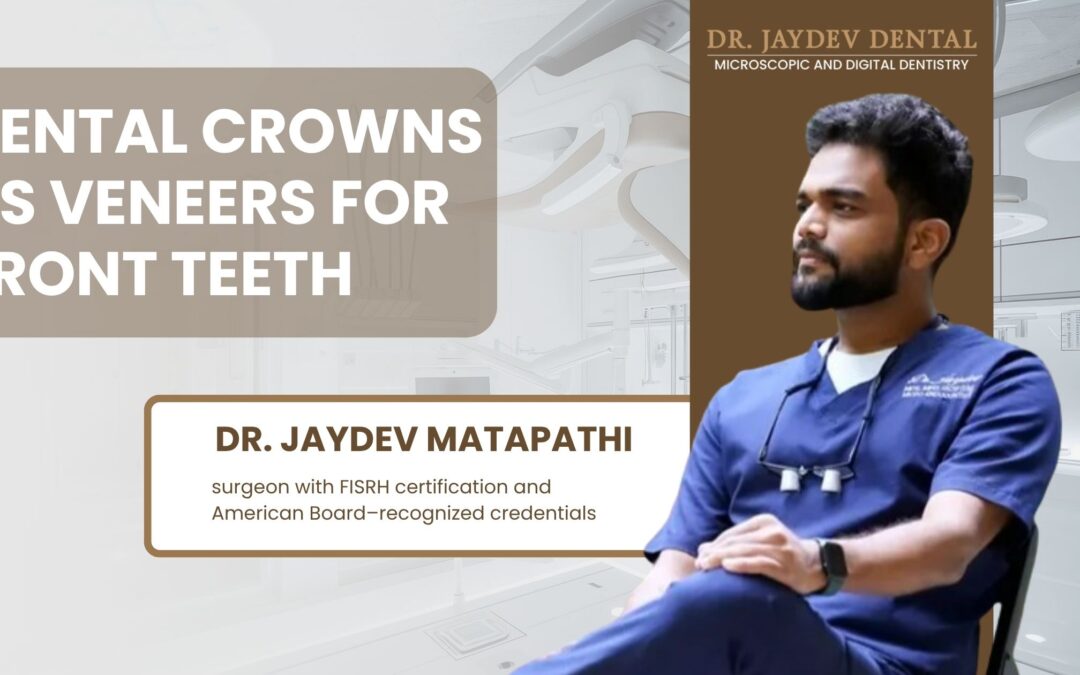
Veneers are generally better for improving the aesthetics of front teeth, giving a more natural look with less tooth reduction of under 1 mm. They work well for staining, minor gaps, and small chips. Crowns cover the whole tooth and suit severely broken, decayed, or root-canal-treated teeth that need structural strength, though prep is more extensive.
According to Dr. Jaydev, veneers in Hyderabad, A front tooth with sound structure rarely needs a full crown, and shaving it down just to match shade is something I try hard to avoid in most smile design cases.
Worried about grinding down a healthy front tooth?
Which option actually suits front teeth better?
Front teeth are thin, visible, and bear less force than molars, so the pick depends mostly on how much natural tooth is still sound.
- Structure: If the enamel is intact and the tooth just needs shape or shade work, veneers make sense because barely a sliver of enamel gets touched, whereas crowns grind the whole tooth down to a stump.
- Damage: Cracked or root canal treated front teeth usually ask for a crown since a thin veneer on weakened structure can pop off under biting force, no matter how good the bonding is.
- Looks: Veneers let light pass through porcelain like a real tooth does, you get that slightly translucent edge people notice on a good smile, and crowns can look a bit more opaque up close.
- Longevity: A properly bonded veneer runs 10 to 15 years, crowns often go 15 to 20 on front teeth, and honestly the gap narrows a lot once lab work is done by someone who designs for translucency.
If your case feels uncertain, a smile design consultation is the cleanest way to get an actual answer.
How does prep and recovery compare?
How each treatment is done changes how your tooth feels for weeks, and that matters more than patients expect.
- Prep: Veneers need around 0.3 to 0.7 mm of enamel shaved from just the front, crowns need 1 to 2 mm off every side including the back, which is why crown prep feels a lot more invasive in the chair.
- Visits: Most veneer cases wrap in two sittings about a week apart, crown cases run similar but sometimes add a third if the bite needs tweaking, and same day CEREC is possible for both.
- Sensitivity: Cold sensitivity for a few days after veneer prep is normal, crowns can feel tender near the gumline longer because more tissue gets moved around during impression taking.
- Aftercare: Both need a nightguard if you grind, don’t bite apples or ice with front teeth, and floss the margins carefully because that’s where staining or decay sneaks in.
For bigger cases covering multiple teeth, our guide on full mouth rehabilitation in Hyderabad breaks down how crowns and veneers slot into larger plans.
Why do patients choose Dr. Jaydev Dental?
Dr. Jaydev has over 15 years in cosmetic and restorative dentistry, doing everything from single-tooth veneers to full-arch implant cases, and that range honestly matters because most patients don’t fall cleanly into one bucket or the other.
What people usually mention is how clearly the plan gets explained before anything gets touched. No upsells, no fuzzy quotes. Just an honest read on whether you need cosmetic work, functional work, or some mix of both.
Reference links
- Dental Veneers Overview — American Dental Association
- Dental Crowns Clinical Guide — NIH MedlinePlus
Frequently Asked Questions
Will veneers damage my natural teeth?
No, very little enamel is removed, way less than a full crown needs.
Can veneers fix crooked front teeth?
Yes, mild crowding or small gaps can be masked without braces using veneers.
Do crowns look as natural as veneers?
Modern all-ceramic crowns come close, but veneers still edge ahead on translucency.
How long before I can eat normally?
Soft foods for a day or two, then normal diet once sensitivity settles down.