
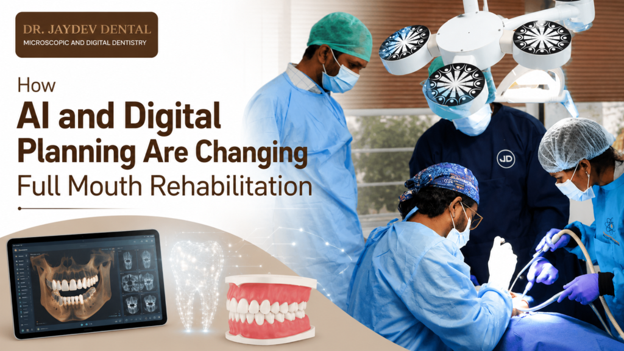
What if your dentist could get a clearer picture of your entire smile before starting your full mouth rehabilitation? Modern technology can bring together information about your teeth, bite, gums, and jaw to help understand how everything works together.
This is where AI and digital dentistry are making a difference. From analysing digital scans and dental images to supporting complex treatment planning, AI-assisted tools can help dentists work with more information and plan treatments that consider both the function and appearance of your smile.
“AI and digital dentistry are not here to replace the dentist. They are helping us understand each patient’s needs better and plan treatment with greater precision.”— Dr. Jaydev Matapathi
Planning a Full Mouth Rehabilitation?
Considering full mouth rehabilitation? Book a personalised consultation to understand your treatment options and how digital planning may support your care.
Why Full Mouth Rehabilitation Requires Careful Planning?
When several teeth need treatment, the process becomes more complicated than simply treating each tooth separately. A change made to one tooth can affect the way the surrounding teeth meet, how you chew, or how your bite feels.
A full mouth rehabilitation may involve treatments such as:
- Crowns and bridges
- Dental implants
- Veneers
- Root canal treatment
- Tooth replacement
- Bite correction
- Other restorative procedures
Before treatment begins, dentists need to understand how these different parts of the mouth work together. They may evaluate the condition of the teeth, gums, bite, jaw movement, existing restorations, and overall oral health.
A carefully planned approach helps ensure that each step of treatment works towards the same goal rather than treating every problem in isolation.
How AI Is Changing Full Mouth Rehabilitation?
AI is becoming a useful tool in modern dentistry, especially when dentists need to bring together information from photographs, digital scans, X-rays, and 3D images.
AI-assisted software can help spot patterns, highlight areas that need closer attention, and support the analysis of tooth wear, bone levels, and other findings. This can make treatment planning more detailed and organised.
But AI does not replace the dentist. It supports clinical judgement, while the dentist interprets the findings and decides what is best for each patient.
The Role of Digital Planning in Full Mouth Rehabilitation
Digital planning brings different types of information together, helping dentists get a clearer picture of the patient’s oral health.
- Digital Scanners: Create detailed 3D models of the teeth for better treatment planning.
- CBCT Scans: Provide a closer look at the teeth, bone, and surrounding structures when needed.
- Digital Smile Design: Helps plan the shape, size, and proportions of the teeth.
- Better Treatment Planning: Brings these technologies together to plan treatment with both function and appearance in mind.
Start With a Clearer Treatment Plan
Every smile has different needs. Schedule an evaluation to explore a treatment plan designed around your oral health, function, and goals.
How Digital Planning Improves the Patient ?
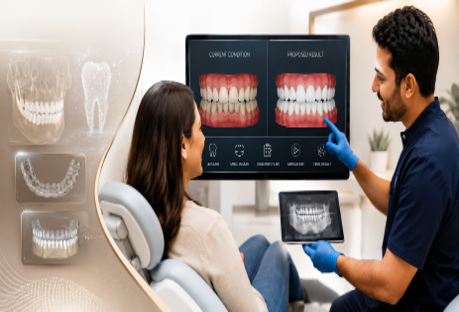
One of the biggest benefits of digital dentistry is that it can make complex treatment easier for patients to understand.
Instead of simply imagining the final result, patients may be able to see digital images or simulations of the proposed treatment. Digital planning can also improve communication between the dentist, specialists, and dental laboratory, helping everyone work from the same information.
For patients, this can mean:
- A clearer understanding of the treatment
- Better communication with the dental team
- A more detailed treatment plan
- A better idea of the expected results
- A more organised treatment process
Digital technology cannot make every case simple, but it can make the journey easier to understand and follow.
What AI and Digital Planning Cannot Replace?
AI and digital tools can support full mouth rehabilitation, but they cannot replace the human side of dentistry. The dentist’s role remains essential for:
- Understanding the patient’s dental history and concerns
- Applying clinical experience and professional judgement
- Interpreting AI-generated findings in the right context
- Considering the patient’s comfort, lifestyle, and expectations
- Choosing the right treatment approach for each individual
- Making decisions based on long-term oral health
- Monitoring treatment and making adjustments when needed
AI can provide information and support planning, but the dentist remains at the centre of every treatment decision.
What Does a Digitally Planned Full Mouth Rehabilitation Look Like?
While every case is different, the process may involve several stages.
1. Comprehensive Evaluation
The dentist first examines the teeth, gums, bite, and overall oral health to understand the problems that need to be addressed.
2. Digital Records
Depending on the case, the dentist may take digital photographs, intraoral scans, X-rays, or 3D images.
3.Treatment Planning
The collected information is reviewed to understand how the teeth, bite, and surrounding structures work together. Digital tools and AI-assisted technology may help with analysis and planning.
4. Patient Discussion
The proposed treatment is discussed with the patient, including the goals, possible treatment options, expected outcomes, and the sequence of procedures.
5. Treatment
Once the plan is finalised, the required procedures are carried out in stages. The treatment may include restorative work, implants, orthodontics, or other procedures depending on the patient’s needs.
6. Follow-Up and Maintenance
Full mouth rehabilitation does not end when the final restoration is placed. Regular dental visits and good oral hygiene are important for maintaining the results over the long term.
The Future of Full Mouth Rehabilitation
Digital dentistry and AI are likely to play a bigger role in full mouth rehabilitation, helping dentists plan more personalised and precise treatments. However, technology will continue to work alongside clinical experience and professional judgement, keeping the patient’s individual needs at the centre of care.
Frequently Asked Questions
How is AI used in full mouth rehabilitation?
AI can help dentists analyse digital images, identify patterns, and support treatment planning. It does not replace the dentist’s expertise or judgement.
Is digital planning better than traditional planning?
Digital planning provides detailed information and can make complex treatment easier to plan and coordinate. The right approach depends on each patient’s needs.
Can I see how my smile may look before treatment?
In some cases, digital smile design can give you an idea of the potential result. However, the simulation may not exactly match the final outcome.
Does AI make full mouth rehabilitation faster?
AI may help make planning and communication more efficient, but treatment time depends on the procedures involved and your individual needs.
Is digitally planned full mouth rehabilitation suitable for everyone?
Digital planning can benefit many patients, but the technology used depends on your condition and treatment needs. Your dentist can recommend the right approach after an evaluation.