
After a permanent dental crown is placed, avoid eating on that side for 24 hours to let the cement fully set. Skip hard, sticky, or chewy foods like gum and candy for the first 48 hours. Mild tenderness is normal, and gentle brushing along with daily flossing around the crown margin is essential to protect the tooth underneath.
A crown is only as successful as the aftercare behind it. The first 24 hours decide the next 10 years. Dr. Jaydev Matapathi, Cosmetic Dentist & Implantologist, Dr. Jaydev Dental Clinic
Getting a permanent dental cap is one of those quiet wins in dentistry. The tooth that was cracked, root canal treated, or worn down finally gets a proper shield over it. But the work isn’t really finished the moment you walk out of the chair. What you do in the first 24 hours, the first week, and the months that follow is what decides whether the crown lasts five years or fifteen.
A dental cap, also called a dental crown, is a custom-made covering bonded over a prepared tooth. It restores the bite, protects the inner structure, and brings back the look of a natural tooth. The crown itself is strong. The tooth underneath, the gum line around it, and the cement that holds everything together still need careful attention.
At Dr. Jaydev Dental Clinic, every patient walks out with a clear understanding of:
- What was done during the cementation visit,
- Why each aftercare step matters,
- How to spot a problem early before it becomes expensive.
When patients know the why behind the instructions, they actually follow them. And that’s what makes dental cap treatment last.
This blog walks you through everything that happens after the permanent crown is fitted, what’s normal, what isn’t, and the daily habits that protect your investment.
What is a Temporary & Permanent Dental Cap?
Temporary Dental Cap
The temporary goes on during your first visit, right after the tooth is shaped down. Local anaesthesia handles the discomfort, so you’ll feel pressure but not pain. Most appointments wrap up in under an hour. After the prep, your dentist takes an impression, either with putty or a digital 3D scan, and that record is sent off to the lab.
This temporary is usually acrylic. It’s not built to last. Just enough to keep the prepared tooth safe and sealed for the two to three weeks the lab needs.
Permanent Dental Cap
The permanent crown is the real deal. Made from Zirconia, Emax, layered Porcelain, ZMAX Smile, or Gold, picked based on the tooth and what the patient prefers.
On visit two, the temporary comes off, the tooth gets cleaned of leftover cement, and the new crown is tried in. Your dentist checks how it sits next to the other teeth, how it meets the opposing tooth when you bite down, and whether it slides smoothly when you chew. Small adjustments are common. That’s a sign of careful work, not a problem. Once the fit is right, the crown is bonded in place with permanent cement.
Post-operative care
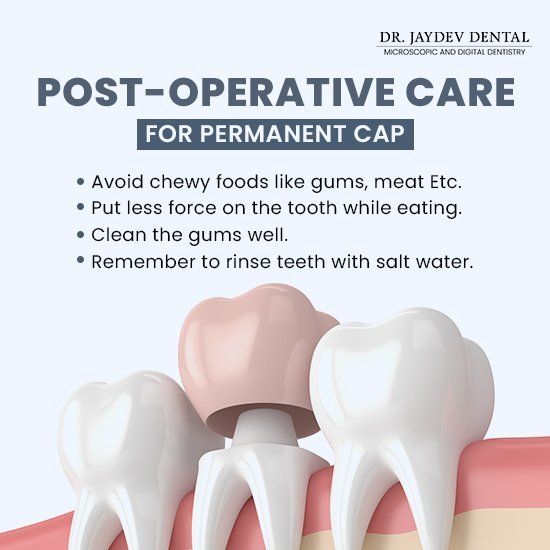
Post-operative care is just the set of habits that protect what was done. The first few hours after cementation matter the most. The bond is settling, your bite is adjusting, and the gums around the margin are recovering from being handled. Get this window right and the rest is smooth.
Why is it necessary?
Aftercare isn’t a one-size-fits-all printout. Your dentist tweaks it based on which tooth was crowned, what material was used, and how your gums behaved during the procedure. The reasons behind the standard advice are simple, and worth knowing.
Prevent discomfort or infection –
A bit of tenderness around the crowned tooth for a day or two? Totally normal. Painkillers or anti-inflammatory tablets sort it out. If the gum was retracted heavily during fitting, antibiotics may be added too.
Improves success rate of the procedures –
Look, the crown can be made beautifully and cemented perfectly. But if you skip hygiene or chew on hard stuff, the tooth underneath gives way. Your part in the recovery matters as much as what your dentist does.
Crown Feeling Off? Don’t Wait It Out.
Signs that you are out of recovery track post-operation
Sensitivity is not normal
Some sensitivity to cold drinks or hot food in the first one to two weeks? That’s part of healing. The tooth was freshly prepared, the nerve underneath is still settling, and traces of bonding chemicals are flushing out of the dentin.
But sharp pain that hangs around for thirty seconds after a sip? Pain that wakes you up at night? Not normal. That kind of discomfort can mean a high bite, a leaking margin, or pulp irritation. Don’t try to ride it out. Get it checked.
Improper fit of your new restoration
Your bite has a memory. You know how your back teeth meet, how the front ones glide past each other, what a relaxed jaw feels like. After the crown settles in a day or two, that familiar feeling should come right back.
If the tooth feels taller than the rest, if you catch yourself biting on it before the others touch, or if there’s a constant pressure even when your jaw is at rest, it needs adjusting. A quick visit. A few seconds of polishing the crown surface. Done.
Factors that Determine Dental Crown Longevity
- Whether the cap sits on a front tooth or a molar that handles heavy chewing.
- Full coverage crown or just a partial onlay.
- Quality of the lab work and how precisely it was cemented.
- Health of the natural tooth structure beneath the crown.
- How disciplined your daily brushing and flossing actually is.
- Habits like chewing ice, biting nails, or using your teeth to open packets.
- The state of your surrounding gums and bone support.
Post-Operative care for permanent Cap:
The cement under your new crown takes time to reach full strength. The first thirty minutes? Critical. Don’t eat or drink during that window. After that, the crown is functional, but going easy on it for the first 24 hours pays off.
You might feel a mild pressure on the crowned tooth or its neighbours. Don’t worry. The bite is just recalibrating around the new shape, and within a few days that feeling fades on its own.
Some simple aftercare habits that actually make a difference;
- Skip sticky and chewy foods like caramel, chewing gum, and tough cuts of meat for the first 48 hours.
- Chew on the opposite side for day one. Stick to softer options like dal, curd rice, scrambled eggs, or well-cooked vegetables.
- Keep the gum line around the crown clean so bacteria don’t settle at the margin.
- A warm saline rinse, two or three times a day, soothes the gums and helps with any temperature sensitivity.
Past the first week, the routine that protects the crown long-term comes down to two non-negotiables.
Brush around Crowns
The crown surface itself doesn’t decay. But the natural tooth right at the edge where the crown meets the gum? That’s where plaque loves to camp out. Use a soft-bristled brush, hold it at a forty-five degree angle to the gum line, and clean in small circles. Avoid hard horizontal scrubbing because it wears down the gum and exposes the crown margin over time.
Floss regularly
Flossing is what actually saves the tooth under the crown. Food particles trapped between the crown and the next tooth start the decay cycle that quietly undermines everything. Slide the floss in gently, hug it around the side of the crown in a C-shape, and pull it out the same way. A water flosser is a strong addition if you have bridges or implant-supported crowns.
Why choose Dr. Jaydev dental
Dr. Jaydev’s clinic in Jubilee Hills runs on one simple idea. Good dentistry is detail dentistry. Every crown case is planned with digital impressions, designed in-house, and finished with materials chosen for the specific tooth and bite. The team includes accredited specialists across endodontics, prosthodontics, and implantology. So a complex case never has to be referred outside.
What patients keep mentioning is the time spent on the bite check before bonding. That extra five minutes? It’s what stops the post-fitting discomfort that brings most people back to other clinics within a week.
Get Your Crown Done Right the First Time
1. Why is a dental cap needed?
A cap protects a tooth that’s decayed, fractured, root canal treated, or too weak to hold a filling.
2. Can I eat right after the cap is placed?
Wait 30 minutes, then stick to soft, lukewarm food for the first 24 hours.
3. How should I brush around the crown?
Skip brushing on day one. From the next morning, use a soft brush gently along the gum line.
4. Are there alternatives to a dental crown?
Inlays, onlays, or veneers work for mild damage. For heavily broken teeth, a crown is the long-term fix.
5. Can the tooth under the crown still decay?
The crown doesn’t decay, but the natural tooth at the margin can if plaque builds up there.
Refrences
- Dental Crowns and Tooth Bonding — American Dental Association (MouthHealthy)
- Care of Crowns and Bridges — National Institute of Dental and Craniofacial Research (NIDCR), NIH