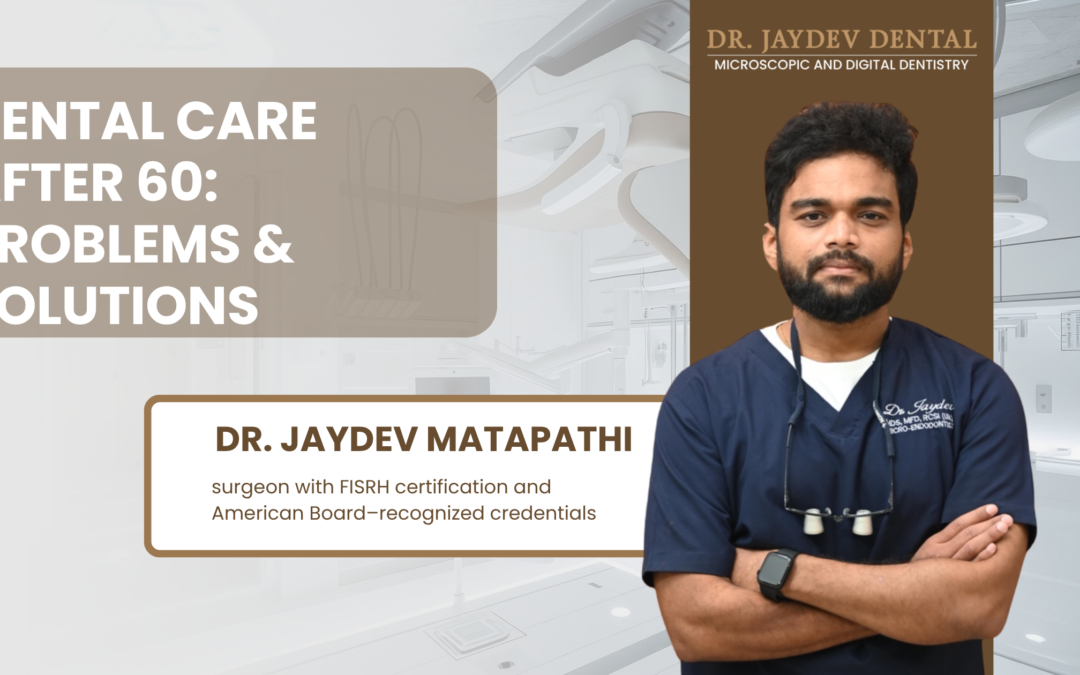
Teeth after 60 carry decades of wear, medications that reduce saliva, gum tissue that has been slowly receding, and old dental work that is starting to crack. Root decay happens faster once enamel thins and gums pull back. Fillings placed thirty years ago expand, contract, and eventually split the tooth around them. Most of these problems are fixable when caught early enough.
According to Dr. Jaydev Matapathi, smile design specialist in Hyderabad, “Patients over 60 think losing teeth is just part of ageing. It is not. What they are losing is time by not treating gum recession and failing restorations before things compound.”
Get your gum disease assessed and priced clearly today.
What Dental Problems Get Worse After 60?
Some of these build quietly for years. Others show up without warning because something that was barely holding finally gave out.
Gum recession exposing root surfaces. Roots lack enamel and decay much faster once gums pull back from years of brushing pressure or untreated periodontal disease.
Dry mouth from daily medications. Blood pressure pills, antidepressants, and antihistamines cut saliva production, and less saliva means cavities form in places that never had problems before.
Old fillings and crowns failing. Amalgam fillings expand over decades until the tooth around them cracks, and old crowns quietly lose their seal letting decay creep underneath.
Bone loss from missing teeth. Every gap left unreplaced has been losing bone this whole time, and the longer you wait the fewer treatment options remain available.
Learn more about dental implants for replacing missing teeth or read about full mouth rehabilitation when multiple restorations are breaking down at once.
What Solutions Actually Work After 60?
The fixes are not complicated but they need to match what is happening in your mouth right now, not what worked twenty years ago.
Prescription fluoride toothpaste. Over-the-counter strength is not enough for exposed roots, and prescription fluoride hardens root dentin to slow decay in vulnerable areas.
Alcohol-free antimicrobial mouthwash. Regular mouthwash dries things out worse, so alcohol-free versions protect without reducing saliva further.
Electric toothbrush and water flosser. Arthritis and stiff hands make manual brushing unreliable, and powered tools do the work without needing fine motor control.
Proactive replacement of old restorations. Swapping out cracked fillings and failing crowns now costs a fraction of what emergency extractions and root canals cost later.
For patients whose teeth are wearing down from acidic foods, dental crowns and bridges protect what is left. And for preventive cleaning, tooth cleaning and polishing removes tartar buildup that home brushing cannot reach.
Why Choose Dr. Jaydev Dental Clinic
Dr. Jaydev Matapathi (MDS, MFD RCSI, MFDS RCPS UK) evaluates every patient over 60 for gum recession, bone density, medication-related dry mouth, and existing dental work condition before recommending anything. Over 336 Google reviews at 4.9 rating, built on assessments that account for medical history and realistic recovery.
Nobody here gets rushed into a procedure. Treatment plans match the patient’s actual situation, not a generic checklist. Patients managing deteriorating dental health for years without direction usually find that one proper assessment changes the entire picture.
Reference links
- Indian Dental Association — https://www.ida.org.in/
- National Institute of Dental and Craniofacial Research — https://www.nidcr.nih.gov/health-info/gum-disease
Frequently Asked Questions
Is tooth loss normal after 60?
No, it results from untreated disease not ageing.
Can dental implants work after 60?
Yes, bone density matters more than age alone.
What causes dry mouth in older adults?
Medications like blood pressure pills and antidepressants reduce saliva.
How often should seniors see a dentist?
Every six months minimum, more often with gum disease.