
Dental implants can last a lifetime. The titanium fixture that integrates with bone has a 20-year survival rate of 88% to 92% in clinical data. The crown attached to it typically lasts 10 to 15 years before needing replacement. So when patients ask how long implants last, the honest answer is: the implant itself, potentially decades; the restoration on top, one to two decades with proper maintenance. What shortens both timelines is predictable bone quality, gum health, smoking, and how consistently the patient maintains them after placement.
According to Dr. Jaydev, a full mouth dental implants in Hyderabad, “I’d been told implants were permanent, but nobody explained what ‘permanent’ actually depended on until the pre-treatment assessment here.”
Considering implants and want to know what affects how long they’ll hold?
What Determines How Long an Implant Lasts?
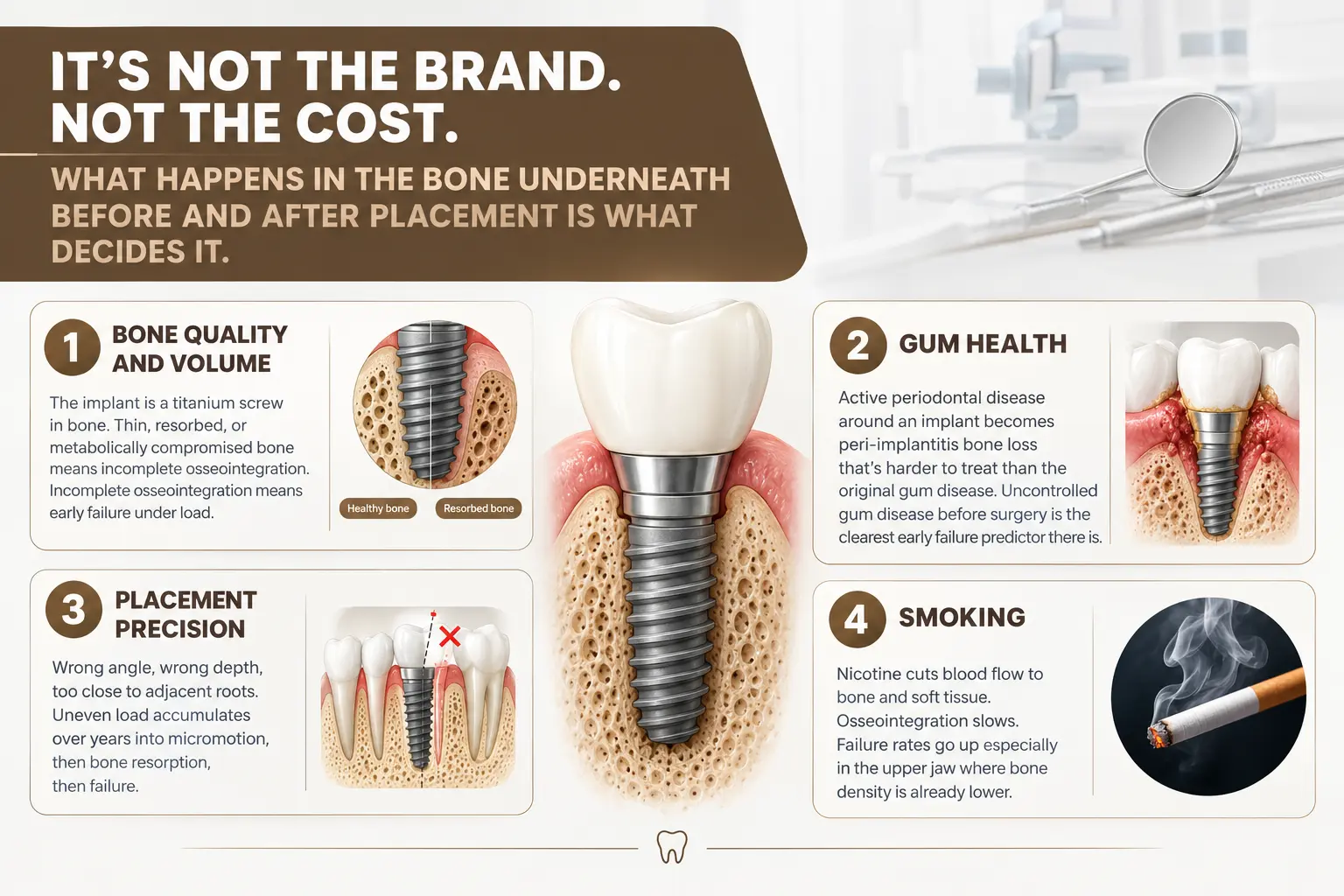
None of it is a surprise finding. A thorough pre-implant workup flags every one of these before anything is cut.
Full mouth rehabilitation in Hyderabad for cases where implants are part of a larger restoration plan.
What Can Make an Implant Fail After Placement?
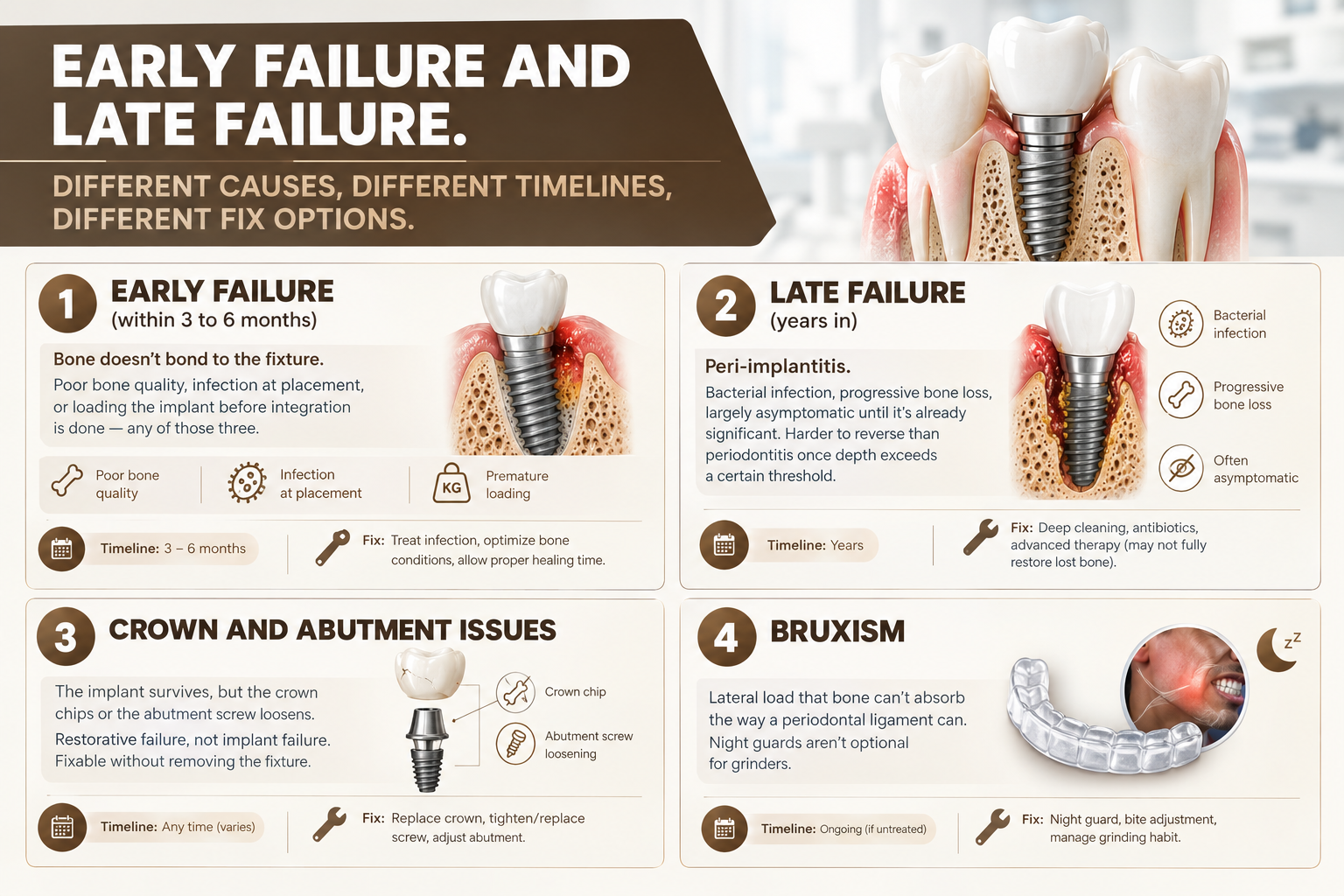
The fixture is usually the last thing to go. What fails first is the restoration on top of it worth reading about how safe smile designing is before adding cosmetic work over an implant.
How Do You Make Implants Last Longer?
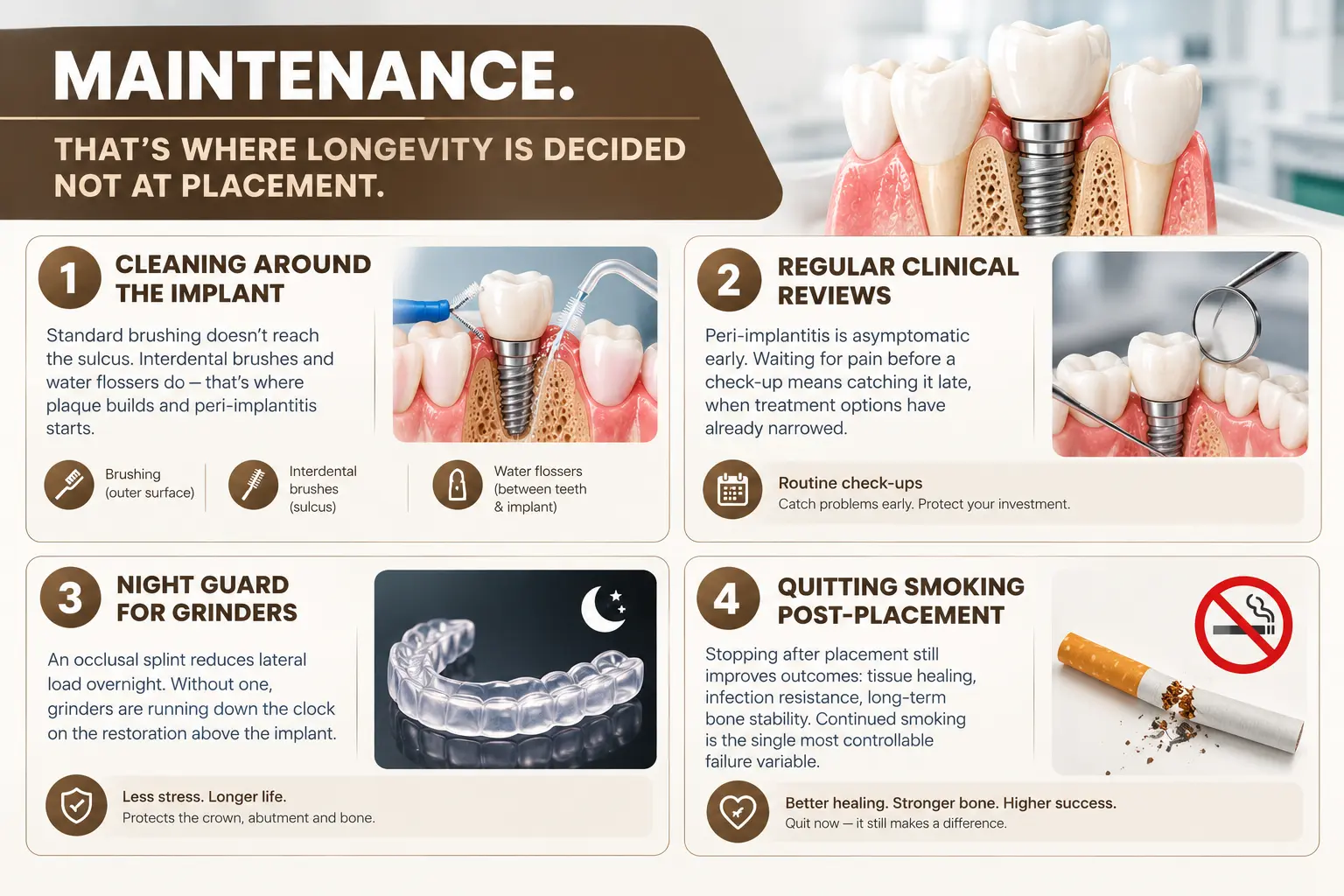
20 years is achievable with full-mouth dental implants. Not passive, though, same consistency as natural teeth.
Key Takeaways
- 20-year survival sits at 88% to 92%; that’s from a 2024 meta-analysis, not an estimate.
- Bone, gums, placement accuracy, and smoking those four variables predict more outcomes than anything else.
- Peri-implantitis is largely preventable. It’s also largely asymptomatic until it’s already a problem.
- The fixture usually outlasts the crown. Most post-placement issues are restorative, not structural.
- Grinders need a night guard from the start. Not eventually.
Frequently Asked Questions
How long do dental implants last on average?
With proper care, most implants last 15 to 20 years survival rates at 20 years are between 88% and 92%.
What is the most common reason dental implants fail?
Peri-implantitis bacterial infection causing progressive bone loss around the implant is the leading cause of late failure.
Can a failed dental implant be replaced?
Yes, in most cases once the site heals and bone loss is addressed, a new implant can be placed.
Do dental implants need special cleaning?
Yes interdental brushes and water flossers are needed to clean around the implant base where standard brushing can’t reach.