
Bone loss around a dental implant is the primary reason implants fail after placement. When the jawbone loses contact with the titanium fixture, osseointegration breaks down, the implant becomes mobile, and removal is unavoidable. This can happen months or years after a seemingly successful placement often without pain until the bone loss is already significant.
According to Dr. Jaydev, a Dental Clinic in Hyderabad , most implant failures linked to bone loss are traceable to one of three causes: inadequate bone volume at the time of placement, peri-implantitis left undetected, or systemic conditions that were not fully controlled before surgery.
Experiencing mobility, discomfort, or swelling around an existing implant?
What Causes Bone Loss Around a Dental Implant?
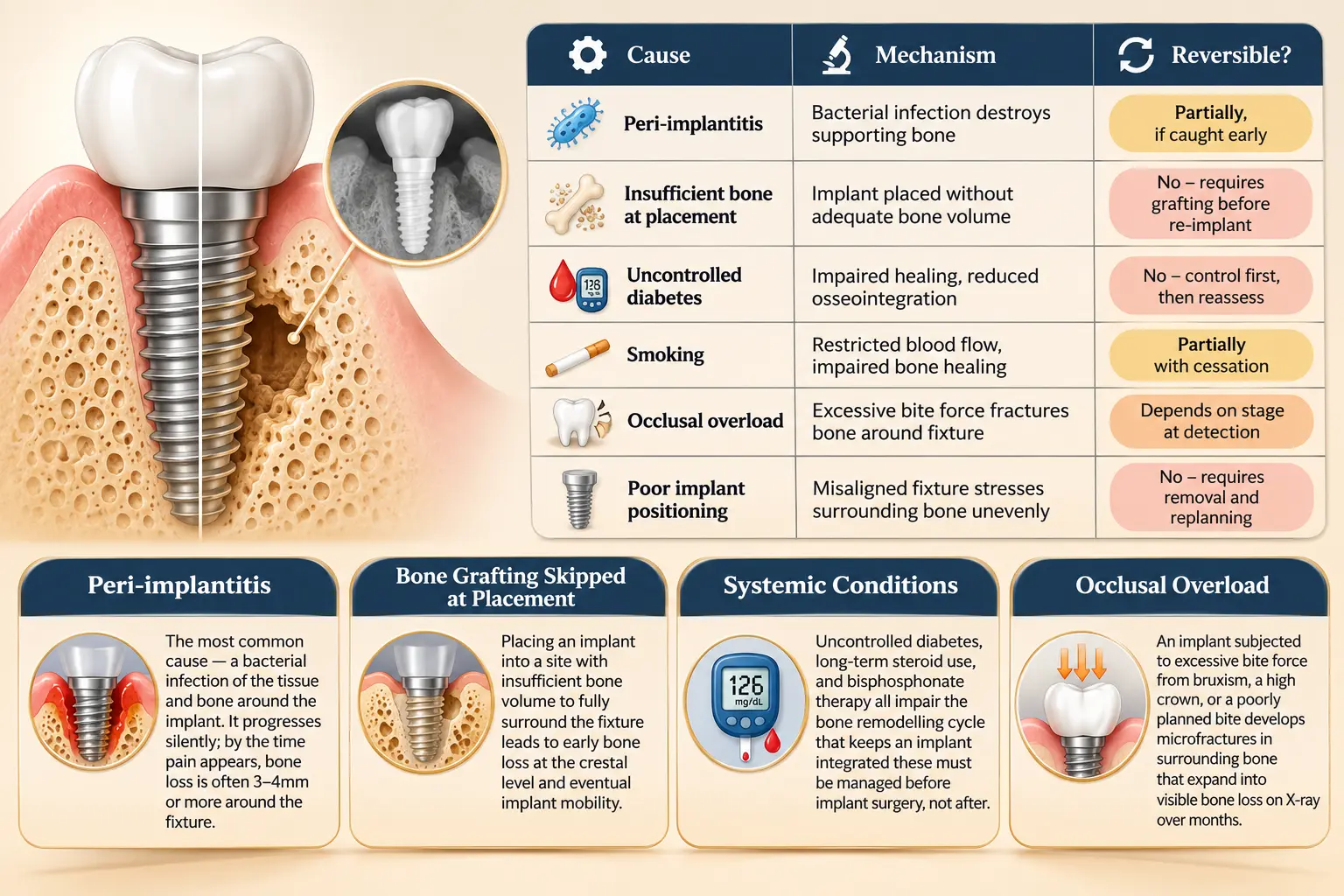
Patients pursuing full mouth dental implants in Hyderabad need a full CBCT scan to map bone volume at every planned site before any fixture is placed.
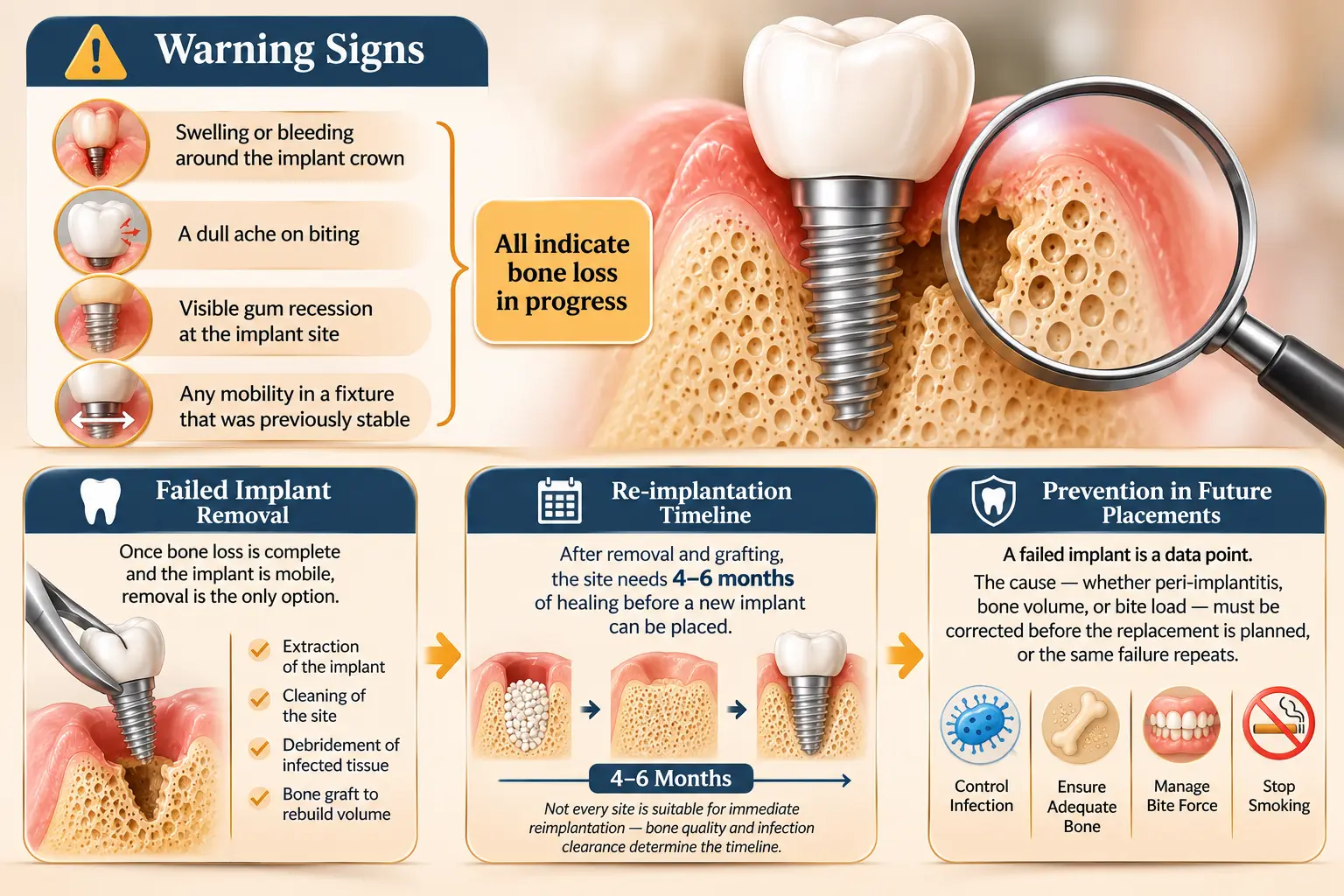
What Are the Signs and What Happens After an Implant Fails?
For patients with complex bone loss or prior failed implants, understanding all available options before reimplantation is essential. For a related case study on how microscopic endodontics resolved persistent dental pain, read failed root canal retreatment how microscopic endodontics ended 2.5 years of pain.
Why Choose Dr. Jaydev Dental?
Dr. Jaydev Dental holds an MDS in Conservative Dentistry and Endodontics from Dr. NTR University of Health Sciences, with MFD RCSI and MFDS RCPS fellowships from the UK and 15+ years of specialist practice in Hyderabad. Failed implant cases at this clinic are assessed with CBCT imaging to map residual bone volume, identify the original failure cause, and plan grafting and reimplantation as a staged, documented protocol not a rushed repeat of the same approach.
A second implant failure is expensive, demoralising, and largely preventable. The difference is in what’s done before the fixture goes in.
Frequently Asked Questions
Can a failing dental implant be saved without removal?
Early-stage peri-implantitis with minimal bone loss can sometimes be managed with debridement and antibiotics.
How long after implant removal can a new one be placed?
Typically 4–6 months after grafting, depending on bone healing and infection clearance.
Does smoking always cause implant failure?
Smoking significantly increases failure risk; cessation before placement and during healing reduces but doesn’t eliminate it.
Is bone grafting always needed before a replacement implant?
Only if the failed site has insufficient remaining bone a CBCT scan confirms whether grafting is necessary.