
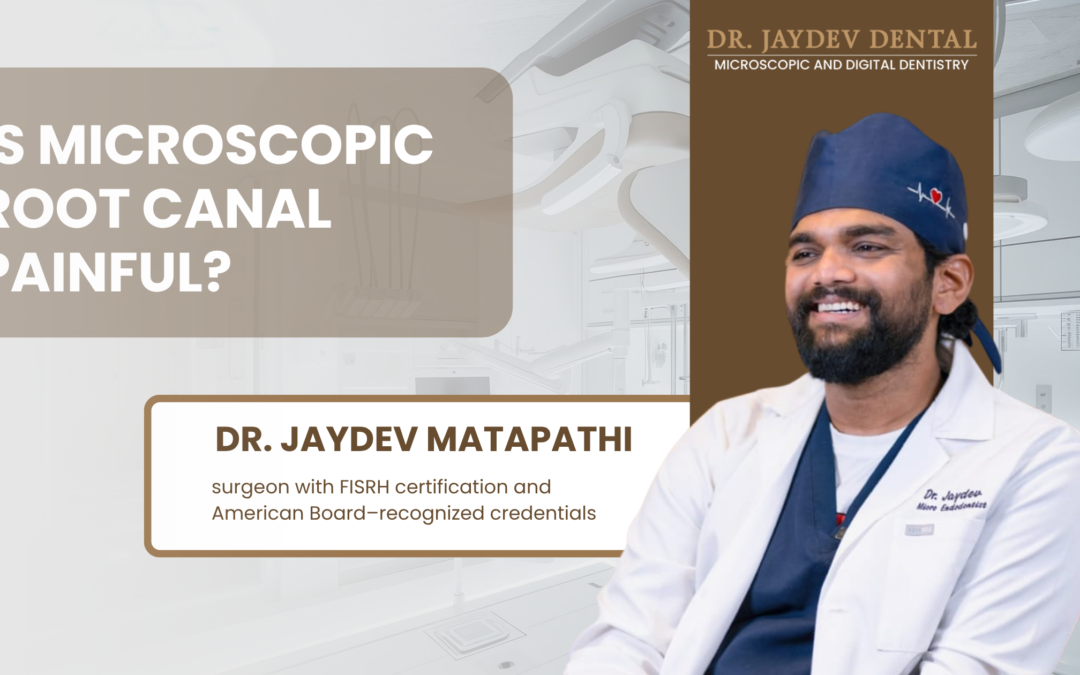
Microscopic root canal treatment is not painful during the procedure. It uses the same local anaesthesia as traditional root canal. The difference is the dental microscope magnifies the inside of the tooth 20-25x, which means the dentist finds every canal, spots hairline cracks invisible to the naked eye, and cleans infected tissue more thoroughly. Less missed infection means less post-treatment pain. Patients who had painful traditional root canals elsewhere often report that the microscopic version felt completely different.
According to Dr. Jaydev Matapathi, smile design specialist in Hyderabad, “Most root canal pain comes after the procedure, not during it. And that pain is almost always from a canal that was missed. The microscope finds what the naked eye cannot.”
Get your gum disease assessed and priced clearly today.
How Is Microscopic Root Canal Different from Regular?
The anaesthesia is the same. The pain management is the same. What changes is what the dentist can actually see inside the tooth.
- 25x magnification finds hidden canals. Molars sometimes have a fourth or fifth canal that does not show on X-rays. Miss one and the infection stays. The tooth hurts again weeks later. Under a microscope that canal gets found and treated the first time.
- Hairline cracks become visible. A vertical crack running through the root is invisible at normal magnification. The microscope reveals it before the dentist spends an hour treating a tooth that was never going to survive anyway.
- More precise cleaning means less tissue irritation. The dentist removes only infected tissue without over-instrumenting healthy areas. Less trauma to the root tip means less inflammation after the procedure and less post-operative soreness.
- Failed previous root canals get properly diagnosed. Old filling material, missed canals, ledges created by previous instruments. All visible under the microscope. The retreatment targets exactly what went wrong the first time.
- For the standard procedure, read about root canal treatment. And for teeth where root canal has failed beyond repair, dental implants become the replacement option.
What Does Pain Actually Feel Like Before, During, and After?
Patients mix up three completely different types of pain. Separating them changes the entire expectation.
- Before treatment the infected tooth throbs. Swollen pulp pressing against the nerve inside a rigid tooth. Keeps you awake. Painkillers barely touch it. This is the pain people wrongly attribute to the root canal itself.
- During the procedure you feel pressure and vibration. Anaesthesia handles the pain. The microscope does not add discomfort. You hear the drill, feel water spray, sense pushing. But sharpness should be zero. If it is not, more anaesthesia goes in before continuing.
- After treatment mild soreness for 1-3 days. The root tip gets slightly inflamed from the cleaning process. Microscopic treatment typically causes less post-operative pain than traditional because the cleaning is more precise and less tissue gets disturbed.
- Persistent pain after day 4 is not normal. If pain returns or worsens after initial improvement, contact your dentist. With microscopic treatment this is rare because the main cause of post-treatment pain, missed canals, has already been addressed.
- For complex retreatment cases, read about microscopic root canal treatment in detail. And for teeth needing crowns after treatment, dental crowns and bridges protect the treated tooth from fracture.
Why Choose Dr. Jaydev Dental Clinic?
Dr. Jaydev Matapathi (MDS, MFD RCSI, MFDS RCPS UK) uses a dental operating microscope for every root canal procedure, not just complicated cases. Over 336 Google reviews at 4.9 rating, with patients regularly reporting that the microscopic root canal was painless compared to previous traditional experiences elsewhere.
The microscope is not reserved for special cases here. It is the standard. Because finding every canal the first time is what prevents the post-treatment pain that gives root canals their bad reputation.
📞 Call Now: 09573444411
Reference links
- Indian Dental Association — https://www.ida.org.in/
- American Academy of Implant Dentistry — https://www.aaid.com/
Frequently Asked Questions
Is microscopic root canal more painful than regular?
No, it is typically less painful because the microscope finds missed canals that cause post-treatment pain.
Why does a tooth still hurt after normal root canal?
Usually a missed canal with residual infection that the microscope would have found.
How long does soreness last after microscopic root canal?
1-3 days of mild soreness, usually less than after traditional root canal treatment.
Does the microscope make the procedure longer?
Slightly, but the accuracy means fewer retreatments and less chance of needing a second appointment.