
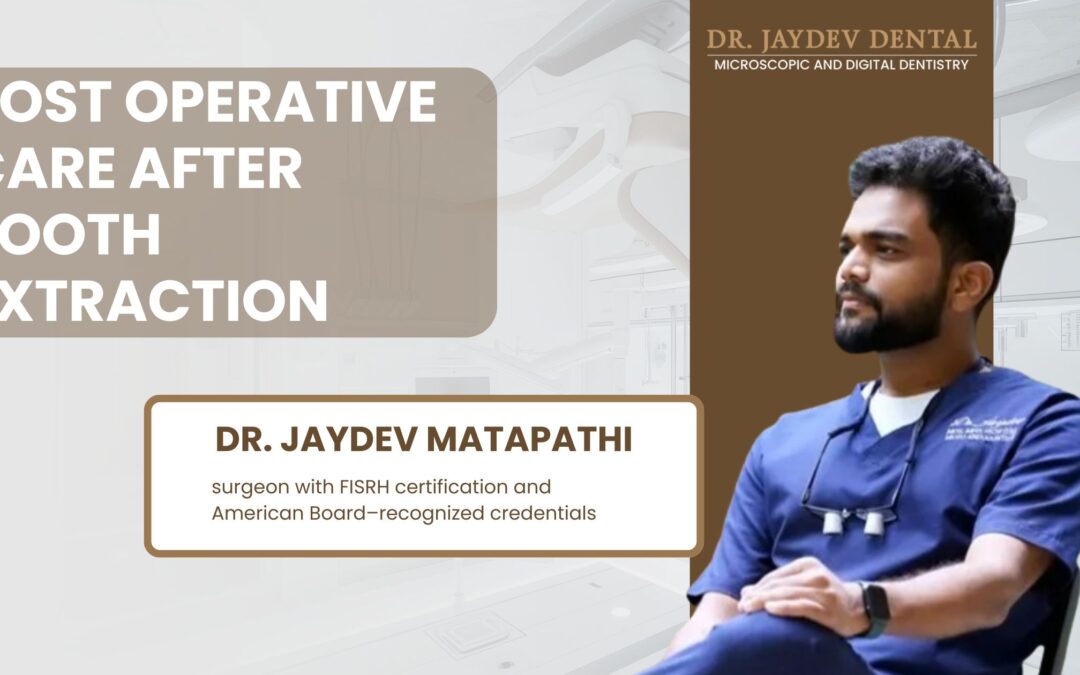
After tooth extraction, bite on the gauze for 30 to 60 minutes to stop the bleeding. For the first 24 to 48 hours, rest with your head propped up, hold an ice pack to the cheek for 20 minutes on and 20 minutes off to settle swelling, eat soft foods, and don’t smoke, use straws, spit, or do anything strenuous. From day two, rinse gently with warm salt water three to four times a day to keep the socket clean.
Honestly, most folks figure the worst part is over once they leave the chair. Nope. The next two days are doing all the real work, and how you handle that window pretty much decides the whole thing. Some patients glide through. Others come limping back on day three with a dry socket because they had to sneak one cigarette. Just one. And that’s all it takes to wreck the clot.
The blood clot that forms in the socket within the first hour is the single most important element of healing. Protect it, and 90% of recovery takes care of itself. Dr. Jaydev Matapathi, Dental Implant & Smile Designing Expert, Hyderabad
What is tooth extraction?
 A tooth extraction is pretty much what the name says. The dentist pulls the tooth out of the jaw. End of definition.
Here’s the bit nobody really talks about though. When an adult tooth comes out, it’s gone for good. Doesn’t grow back. Which is exactly why what you do with that empty socket over the next couple of weeks ends up mattering quite a bit. The bone underneath slowly starts shrinking. Gums close in on themselves. And the teeth on either side, if you don’t fill the gap, can start drifting around. Nothing alarming, just stuff worth knowing.
Wisdom teeth though, those are their own headache entirely. They’re the last to show up, and they almost always come in crooked, half-buried, or shoved sideways into the second molar. Doctors call that an impaction. Ignore it long enough and you’ll deal with gum infections under the flap, sometimes a cyst, plus your front teeth slowly getting pushed out of line. One quick X-ray with a trusted dental specialist in Hyderabad is usually enough to tell whether it’s coming out or staying put.
What is actually involved in a tooth extraction?
You walk in. Sit down. The dentist pulls up your X-ray, asks about your medical history, allergies, current medicines, blood pressure, sugar levels, the works. If you’re on a blood thinner, you’ll get clear instructions on whether to skip a dose. That part isn’t busywork, it genuinely matters.
Next is the injection. Tiny sting for half a second, then it’s done. Few minutes later your cheek and gum go properly numb. From there, the dentist uses an elevator, basically a small lever, to wiggle the tooth loose, then forceps to lift it out. You’ll feel pressure. No pain, just pressure.
Surgical extractions go a bit differently. If the tooth is broken below the gum, stuck under the bone, or has weird hooked roots, there’s a small gum incision, occasionally a sliver of bone shaved off, and stitches at the end. Either way, sterile gauze gets parked on the socket so the clot can do its thing. Side note, if your tooth is wrecked but the root is still solid, root canal treatment usually gets tried first. Saving a natural tooth always wins over pulling one.
Know the types of tooth extraction
- Simple Extraction: Tooth’s fully visible, dentist loosens it, lifts it out. No incisions. No stitches. Most adult removals fit here.
- Surgical Extraction: Tooth is impacted, snapped under the gum, or has tricky roots. Small gum cut, maybe a touch of bone trimmed, stitches at the end. Usually handled by oral surgeons offering endodontic and surgical dentistry services.
Worried about your recovery? Book a post-op consultation with Dr. Jaydev today.
Here are the top 5 reasons why we need a tooth extraction
- Severe, irreparable tooth decay
Decay is sneaky. Starts on the surface, chews through the enamel, then the dentin, and eventually reaches the pulp. By the time real pain shows up, you’ve already lost half the tooth structure. Once there’s not enough left to anchor a crown, the only safe option is taking it out before bacteria walk into the jaw. - Advanced periodontal disease
Years of neglected gum disease quietly eats up the bone and ligaments holding the tooth steady. Once it starts wobbling on its own, that’s your sign. Pulling it actually preserves the bone around it, which matters a lot if you’re thinking about an implant later. - Impacted wisdom teeth
Most modern jaws just don’t have space for wisdom teeth anymore. So they show up tilted, blocked, or jammed sideways. That pressure causes pain, repeated infections under the gum flap, sometimes headaches, and slow movement of every other tooth. Best move is to get them out. - Orthodontic correction
Sometimes your orthodontist will tell you a couple of premolars need to come out before braces start. Sounds harsh, but if there’s no room, the front teeth can’t shift into place without pushing forward. Making space first is what makes the rest of the alignment actually work. - Trauma or fracture
Sports injuries. Falls. Random accidents. A tooth that’s split below the gum line or cracked vertically through the root usually can’t be rescued. Pulling it cleanly is step one before placing a dental implant or bridge later on.
Post Operative care after tooth extraction
| ✗ Don’ts (Wrong) | ✓ Do’s (Right) |
|---|---|
| No straws — at least 72 hours. | Bite on the gauze for 30 to 60 minutes to form the clot. The first hour matters most. |
| No smoking. No alcohol. First 7 days. | Hold an ice pack to the cheek — 20 minutes on, 20 off — through the first 24 hours. |
| Don’t rinse, spit, or gargle hard on day one. | Rest with your head propped up on two pillows for the first 48 hours. |
| No hot drinks, hot soup, or very hot food for 24 hours. | Eat soft, lukewarm food for 2 to 3 days. |
| Don’t poke the socket — not with your tongue, finger, or anything else. | Take prescribed medicines on time. Never on an empty stomach. |
| No fizzy drinks, crunchy chips, or sticky food. | From day two, do gentle warm salt-water rinses, three to four times a day. |
| No gym, no heavy lifting, no hard exercise for 48 to 72 hours. | — |
What are the post-operative care steps within 48 hours of surgery?
The first two days carry pretty much all the risk. Three things to watch. Bleeding. Swelling. Food.
Bleeding
Bite hard on the gauze for 30 to 60 minutes the second you walk out of the clinic. Don’t keep peeking every five minutes to check, that just slows things down. Pink-tinted saliva for the next few hours is fine. Not actual bleeding.
If you do see real bleeding continue, fold a fresh piece of gauze, set it over the socket, bite down for another 30 minutes. A damp black tea bag works in a pinch. The tannins help the clot grip. If it’s heavier than a slow ooze past the first hour, ring the clinic.
Swelling
Ice pack wrapped in a thin cloth, pressed against the outside of the cheek. 20 on, 20 off, through the first 24 hours. Swelling usually peaks somewhere around day 2 or 3, then starts coming down. Sleep with two pillows, head a bit elevated, it actually helps. Still building by day four? That’s a check-up.
Eat Soft Food
For the first 48 to 72 hours, soft and lukewarm. Yogurt. Mashed potatoes. Scrambled eggs. Dal khichdi. Smoothies eaten with a spoon, never a straw. Lukewarm soup. Well-cooked oats.
Chew on the other side. Stay clear of anything that can sneak into the socket, like rice grains, popcorn kernels, or sesame seeds. If you’ve also got a tooth cleaning and polishing session lined up the same week, same diet rules apply.
Post-operative care after 48 hours of surgery
Oral Hygiene
From day two onward, gentle warm salt-water rinses three to four times a day, especially after eating. Keeps the socket clean, knocks down the bacterial load. Brush the rest of your teeth like normal. Just keep the bristles away from the extraction site for 7 days. Some people stop brushing altogether out of fear, that’s actually worse than careful cleaning.
Nausea and Vomiting
Nausea after extraction is almost always one of three culprits. The anaesthesia. Antibiotics. Or strong painkillers swallowed on an empty stomach. Eat something light first, then take the pill. Sip water, coconut water, clear fluids through the day. If the nausea hangs around longer than expected, ask your dentist for a milder painkiller.
Avoid Smoking
Smoking is hands down the number one preventable cause of dry socket. The suction motion yanks the clot loose. The chemicals slow down tissue repair. Stay off cigarettes for 7 to 10 days, bare minimum. Same goes for alcohol, which thins the blood and reacts with antibiotics.
Use over-the-counter medications correctly
Once the anaesthesia wears off, paracetamol or ibuprofen at the dose your dentist gave you takes care of most of the discomfort. Don’t double up because it isn’t kicking in fast enough. If pain suddenly shoots up on day three or four, especially with a foul taste, that’s not regular soreness. That’s dry socket or infection. Pick up the phone, don’t reach for another pill.
Why choose Dr. Jaydev Dental?
Tooth extraction itself is routine. Recovery is where the real outcome gets decided. Five things sum up almost everything that matters. Bite on gauze for 30 to 60 minutes. Ice 20 on, 20 off, through the first 24 hours. Soft food for 2 to 3 days. No smoking or straws for 72 hours. Warm salt-water rinses from day two.
Most people feel noticeably better by day three. Soft tissue closes over 2 to 3 weeks. The bone underneath keeps remodelling for several months after that, quietly, in the background. If pain keeps climbing past day three, bleeding doesn’t ease, swelling worsens, or fever and a foul taste turn up, don’t sit on it. Call Dr. Jaydev Dental Clinic in Jubilee Hills, Hyderabad, and the team will sort it before it grows into something bigger.
Missing a tooth after extraction? Restore your smile with permanent dental implants at Dr. Jaydev Dental Clinic.
1. How long does pain last after a tooth extraction?
Most pain eases up within 48 to 72 hours on prescribed painkillers. Sharper pain after day three? That needs a check.
2. When can I eat normal food again?
Stick with soft, lukewarm food for the first 48 to 72 hours. Most folks are back on a regular diet by day 7 to 10.
3. What is dry socket and how do I avoid it?
Dry socket happens when the clot inside the socket gets dislodged. Skip smoking, straws, and hard rinsing for the first 72 hours.
4. When should I contact my dentist?
Call the clinic if bleeding keeps going past an hour, swelling builds after day three, or fever and a foul taste turn up.
5. Can I brush after a tooth extraction?
Yes, brush the rest of your teeth like normal. Skip the extraction site for 24 hours, then ease back into gentle cleaning around it from day two.
Refrences
- American Dental Association – Tooth Extraction Aftercare. mouthhealthy.org
- Mayo Clinic – Wisdom Tooth Extraction Recovery. mayoclinic.org