
Full mouth reconstruction restores both function and aesthetics by repairing or replacing most teeth in the upper and lower jaws using crowns, veneers, implants, and bridgework. This comprehensive approach corrects issues like broken teeth, decay, worn enamel, and misalignment. It is designed for long-term oral health, improved chewing, and a confident smile.
At Dr. Jaydev Dental Clinic, full mouth reconstruction isn’t about chasing a perfect smile. It’s about rebuilding the bite, the gums, the supporting bone, in the right sequence, so results hold up for 15 years, not 15 months. Every case we plan at our dental clinic in Hyderabad starts with function. Aesthetics without function is cosmetic scaffolding.
Close to half of Americans still call a smile the most memorable thing about meeting someone, and honestly that number hasn’t shifted much. For patients whose mouths have gone past cosmetic territory, reconstruction is the way back.
What is Full Mouth Reconstruction?
Not one procedure. A planned sequence, rebuilding bite, gums, supporting bone, visible teeth, roughly in that order of priority. Jaw joint, gum line, enamel, crown length, each addressed on its own timeline inside one plan.
Ten years ago most of our reconstruction patients were severe decay cases, advanced gum disease, pain they’d learned to live with. Still true. But the patient profile has opened up. Missing several teeth, worn-down bites from grinding, trauma cases, congenital enamel problems, all candidates for full mouth reconstruction once the workup confirms it.
Two things decide how results age. Whether the dentist plans the full sequence before touching a single tooth, and whether the patient sticks with aftercare. Skip either, even beautiful dental work falls apart.
What is the difference between a smile makeover and a full mouth reconstruction?
Patients mix these up constantly, and fair enough. Both end with a better smile. The road there is nothing alike.
Smile makeover handles the front of the house. Whitening, veneers, reshaping, maybe a small alignment fix. Reconstruction rebuilds the whole structure, often jaw bone, gum tissue, the bite relationship itself.
Chewing hurts, certain foods off the menu, speech slurring because molars are gone, at that point the mouth is past cosmetic territory. Reconstruction puts function first, lets aesthetics come along for the ride.
Simplest way to think about it: makeover is elective, patient’s choice. Reconstruction is usually recommended, because leaving it alone means more pain, more breakdown.
Living with pain, missing teeth, or a bite that just doesn’t feel right anymore?
Repair Multiple Problems at One Time?
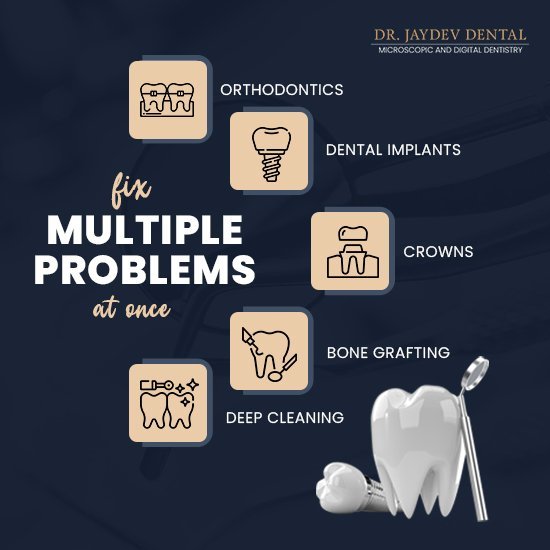
Mouth works as a system, so the procedures stack. A reconstruction plan can carry four or five of these, sequenced in a specific order so each step holds up the next.
- Orthodontics: Misaligned teeth throw the bite off, making any restoration sit unevenly. Braces or Invisalign sort the arch before crowns or veneers go on top.
- Dental Implants: Missing teeth trigger bone loss, shifting, a whole cascade. Implants replace the root first, the visible tooth second, that sequence is not optional.
- Bone Grafting: Jaw bone thins after tooth loss or advanced gum disease. A bone graft rebuilds enough volume for implants to anchor, usually months ahead of the implant itself.
- Crowns: For cracked teeth, discoloured ones, teeth weakened by old root canals. Zirconia crowns these days blend in so well even colleagues miss them on exam.
- Deep Cleaning: Plaque, tartar below the gum line, feeds gum disease, which eats the bone holding teeth in place. Clean it out first. You can’t build on infected ground.
How will you know you are the candidate for full mouth reconstruction?
Not every dental concern needs reconstruction. Plenty of cases close with one or two procedures. Reconstruction enters the picture when problems are connected, where fixing one alone just pushes the damage elsewhere.
Examines teeth health
Multiple missing teeth, the jaw has already started remodelling. Deep decay reaching the nerve, gum recession exposing roots, cracks running into bone, these are signs the mouth needs a plan, not a patch.
Increased pain
Chronic dental pain is a signal. Not a nuisance. Cold sensitivity that lingers, pain on biting, dull jaw ache that won’t quit, these point to infection, nerve involvement, joint strain, and they compound if ignored.
Oral functioning problems
Trouble chewing softer food. Slurring on certain sounds. Avoiding one side of the mouth altogether. When function starts to go, the rest of the mouth overcompensates, wears faster. That’s why a reconstruction plan looks at the whole bite, not just the sore tooth.
Congenital conditions
Ectodermal dysplasia. Enamel hypoplasia. Amelogenesis imperfecta. Present from birth. Missing teeth, soft or malformed enamel, underdeveloped jaws, all of it responds well to a staged reconstruction done in early adulthood.
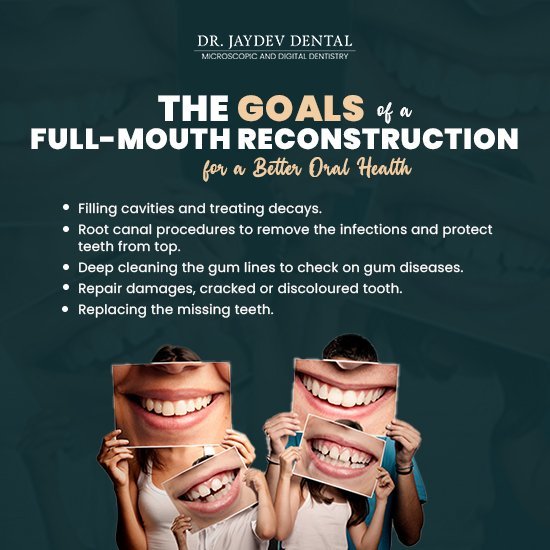
The Goals of a Full-Mouth Reconstruction - Better Oral Health
Function first. Aesthetics second. That’s the order that holds up at the 15-year mark. A reconstruction that photographs well at year one but collapses by year five was planned backwards.
Every plan gets built around the individual, bone volume, bite pattern, medical history, what the patient actually wants at the finish. Typical procedures inside a plan:
- Filling cavities, stabilising active decay
- Root canal therapy where the nerve is compromised
- Deep cleaning and periodontal therapy for gum disease
- Repairing cracked, worn, or discoloured teeth with crowns or onlays
- Replacing missing teeth with implants, bridges, or full-arch restorations
Sequence matters. Infection control before restorations. Bone and gum health before implants. Bite correction before cosmetic finishing.
Our Case Study
Patient in his early sixties, walked in describing “a pain I’ve ignored for a year.” Exam showed receded gums, two cracked molars, moderate bone loss, generalised discolouration.
Plan ran like this.
- Full examination, 3D CBCT imaging, bite analysis, periodontal charting
- His priority was pain relief and cleaner-looking teeth, so we planned deep scaling, root canals on the two cracked molars, full-arch crowns on the upper teeth
- Six visits, eight weeks
- Follow-ups at three and six months to check gum response and bite stability
Two years out now. Six-monthly recall. No complications.
Not sure if your dental problems need one procedure or a full reconstruction plan?
1. What treatments does a full mouth reconstruction procedure include?
Crowns, veneers, implants, bridges, inlays, onlays, dentures, and whitening, sequenced into one plan.
2. How can I start the process of full mouth reconstruction?
Book a consultation at Dr. Jaydev Dental Clinic for an exam covering teeth, gums, and jaw, followed by a personalised treatment plan.
3. Do full mouth reconstruction and smile makeover bring out the same results?
Both involve multiple procedures, but reconstruction is medically indicated for structural issues, while a smile makeover is purely elective and aesthetic.
4. What will be the treatment duration?
Simple cases take two to three months. Complex cases with grafts, orthodontics, or full-arch implants can run six months to a year.
5. How to care after restoration?
Brush twice daily, floss once, six-monthly cleanings, and avoid chewing ice or hard foods on restored teeth.
Refrences
- American Dental Association – Bone Graft
- National Institute of Dental and Craniofacial Research – Oral Health in America