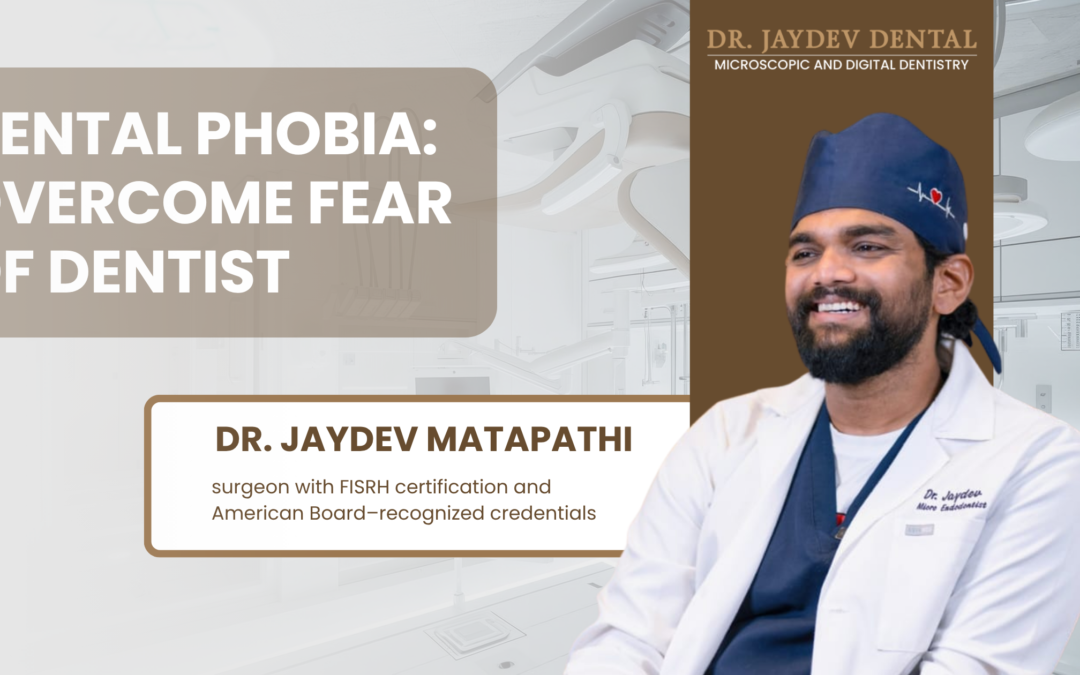
Dental anxiety affects roughly 36% of the population and about 12% avoid treatment entirely because the fear is too severe. The cycle is predictable. Skip appointments, problems worsen, the eventual visit becomes exactly the painful experience you feared, and the phobia reinforces itself. Sedation options range from nitrous oxide (₹1,000-₹3,000) to oral sedation (₹2,000-₹5,000) to IV sedation (₹8,000-₹15,000) for severe cases. But most phobic patients do not actually need sedation. They need a dentist who takes the fear seriously.
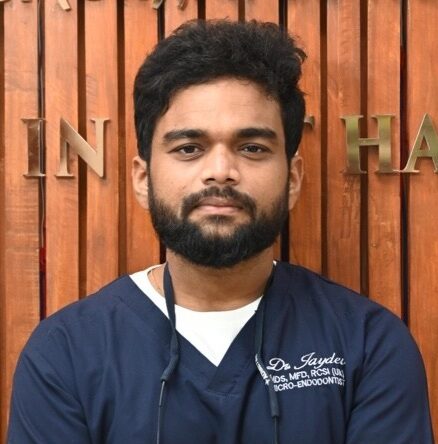
According to Dr. Jaydev Matapathi, smile design specialist in Hyderabad, “Half the phobic patients I see do not need sedation. They need someone who stops when they raise a hand and explains what is happening before doing it.”
Get your gum disease assessed and priced clearly today.
What Actually Causes Dental Phobia?
It is never just one thing. And telling someone to relax has never worked in the history of dentistry.
- A bad childhood experience that stuck. Something hurt at age seven or eight because the dentist did not wait for anaesthesia, and that memory sits there triggering panic decades later.
- The sound of the drill. That high-pitched whine triggers something primal in people even when they are not particularly scared of pain itself.
- Loss of control in the chair. Lying back with your mouth open while someone works inside it and you cannot talk, swallow, or see what is happening.
- Embarrassment about neglected teeth. People who avoided the dentist for years know their teeth are bad, feel ashamed, and avoid going further which makes everything worse.
For patients whose fear has led to years of neglect, full mouth rehabilitation staged across visits with sedation makes the process manageable. And understanding root canal treatment beforehand removes the fear of the unknown that drives most anxiety about that specific procedure.
What Actually Helps Overcome Dental Fear?
Not “try to relax” advice. Real techniques that change how the visit feels.
- The stop signal. Raise your hand and everything stops immediately with no questions, and knowing you have that control changes the entire experience.
- Tell-show-do before every step. The dentist tells you what is about to happen, shows you the instrument, lets you hear the sound, then does it so nothing comes as a surprise.
- Nitrous oxide for mild anxiety. Breathe it through a nose mask, it kicks in within minutes, wears off in five minutes after removal, and you drive yourself home.
- IV sedation for severe phobia. Administered by an anaesthetist, you are in a twilight state, technically conscious but deeply relaxed and amnesic afterward for the worst cases.
Learn about smile makeover options for patients ready to fix years of neglect or read about dental implants which can be done under sedation for anxious patients.
Why Choose Dr. Jaydev Dental Clinic?
Dr. Jaydev Matapathi (MDS, MFD RCSI, MFDS RCPS UK) structures the entire first visit differently for phobic patients. No treatment on day one unless the patient asks for it. Conversation first about what scares you, what happened before, and what would make this easier. Over 336 Google reviews at 4.9 rating, many from patients who had not seen a dentist in years.
Some people need two visits before they are comfortable enough for a cleaning. That is fine here. Nobody rushes a scared patient into a chair. The goal is building trust so sedation becomes unnecessary over time and patients actually come back for their next appointment.
📞 Call Now: 09573444411
Reference links
- ndian Dental Association — https://www.ida.org.in/
- American Dental Association — https://www.ada.org/
Frequently Asked Questions
Is dental phobia a real condition?
Yes, it affects 36% of people and 12% avoid care entirely.
Can you be sedated for dental work?
Yes, from mild nitrous oxide to IV sedation by an anaesthetist.
Will I be judged for neglected teeth?
No, dentists treating phobic patients see this every week.
Will I need sedation for every visit?
Usually not, most patients stop needing it after one or two positive experiences.