
Clear aligners have transformed modern orthodontics, offering a comfortable and nearly invisible way to straighten teeth. However, while aligners are highly effective for many patients, not every treatment goes as planned. In some cases, patients may experience unsatisfactory results, prolonged treatment time, or incomplete alignment. At Dr Jaydev Dental, we often see patients with concerns about their ongoing or previous aligner treatments. Understanding why aligner treatments fail and more importantly, how these issues can be corrected can help patients make informed decisions and achieve the smile they desire.
The most common reasons aligner treatments fail
Aligner failure rarely happens by chance. It is almost always traceable to one or more of the following clinical or behavioural factors:
- Inadequate case assessment at the outset – Not every malocclusion is suitable for aligners alone. Severe crowding, significant skeletal discrepancies, or complex bite issues may require a combination of treatments. When a patient is placed into an aligner system without a thorough 3D diagnostic assessment, the treatment plan starts on shaky ground.
- Poor patient compliance- Clear aligners are only effective when worn for the recommended 20–22 hours per day. Removing them too frequently even by a few hours daily means teeth are not receiving the consistent, controlled force necessary for movement. Over weeks, this adds up to significant treatment drift.
- Incorrect or poorly designed aligner sequences – The digital planning behind aligners must be precise. If tooth movements are programmed too aggressively, or if the sequence does not account for individual anatomical variables, the aligners will not track meaning the teeth stop following the planned path.
- Inadequate attachment placement – Attachments small tooth-coloured bumps bonded to the teeth help the aligner grip the tooth and achieve specific movements. When attachments are incorrectly placed, undersized, or missing entirely, the aligner loses the mechanical purchase it needs to move teeth predictably.
- Lack of monitoring and mid-course corrections – Aligner therapy is not a set-and-forget process. Regular clinical check-ins are essential to assess tracking, identify deviations early, and make refinements before minor issues compound into major setbacks. Treatments that are left largely unsupervised tend to go off-course.
- Skipping or neglecting retention – Even a perfectly completed aligner treatment can fail if the retention phase is ignored. Teeth have a natural tendency to drift back toward their original position. Without a well-fitted retainer worn as directed, the results achieved through months of treatment can begin to reverse within weeks.
Not happy with your aligner results?
Our specialist team offers a comprehensive aligner assessment to identify exactly where your treatment went off-track and what can be done to correct it.
How we diagnose and correct failed aligner treatments
At Dr. Jaydev Dental, corrective aligner therapy begins with a detailed re-evaluation not an assumption. Every patient who comes to us with an incomplete or relapsed treatment receives a fresh diagnostic workup, which typically includes digital intraoral scans, updated photographs, and where necessary, CBCT imaging to assess bone and root positions.
Whether the previous treatment involved generic clear aligners or systems like Invisalign, this data allows us to understand precisely what went wrong and why, before designing a corrective treatment plan.
Depending on the findings, correction may involve:
- Aligner refinements or a full restart using updated digital models that accurately reflect the current tooth positions.
- Repositioning or adding attachments to restore the mechanical advantage needed for controlled tooth movement.
- Adjunctive procedures such as interproximal reduction (IPR) or tooth preparation to create the space required for accurate tracking.
- Combination therapy, incorporating fixed appliances in select cases where aligners alone cannot deliver the required outcome.
- A structured retention protocol following corrective treatment, to ensure results are maintained long-term.
Throughout this process, patient education plays an equal role. We take the time to ensure each patient understands what is required of them because the best clinical plan is only as effective as the cooperation it receives.
Why Expertise Matters in Aligner Treatment
Aligners may seem simple, but successful results require a deep understanding of orthodontics, facial aesthetics, and biomechanics. The difference between a successful and failed treatment often lies in the planning, execution, and monitoring.
Choosing an experienced dental team ensures:
- Accurate diagnosis
- Realistic treatment planning
- Better predictability
- Long-lasting results
Can Failed Aligner Treatments Always Be Fixed?
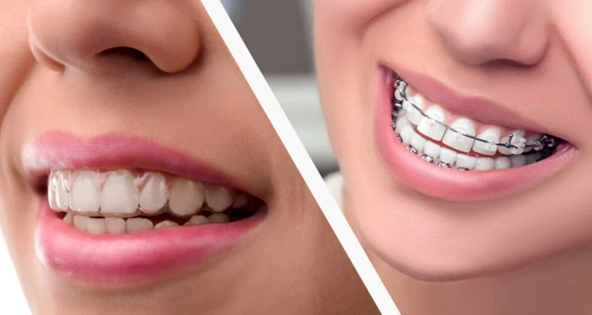
In most cases, yes. Even if previous aligner treatments have not delivered the desired results, corrective options are available. With the right expertise and a tailored approach, patients can still achieve a well-aligned, functional, and aesthetically pleasing smile.