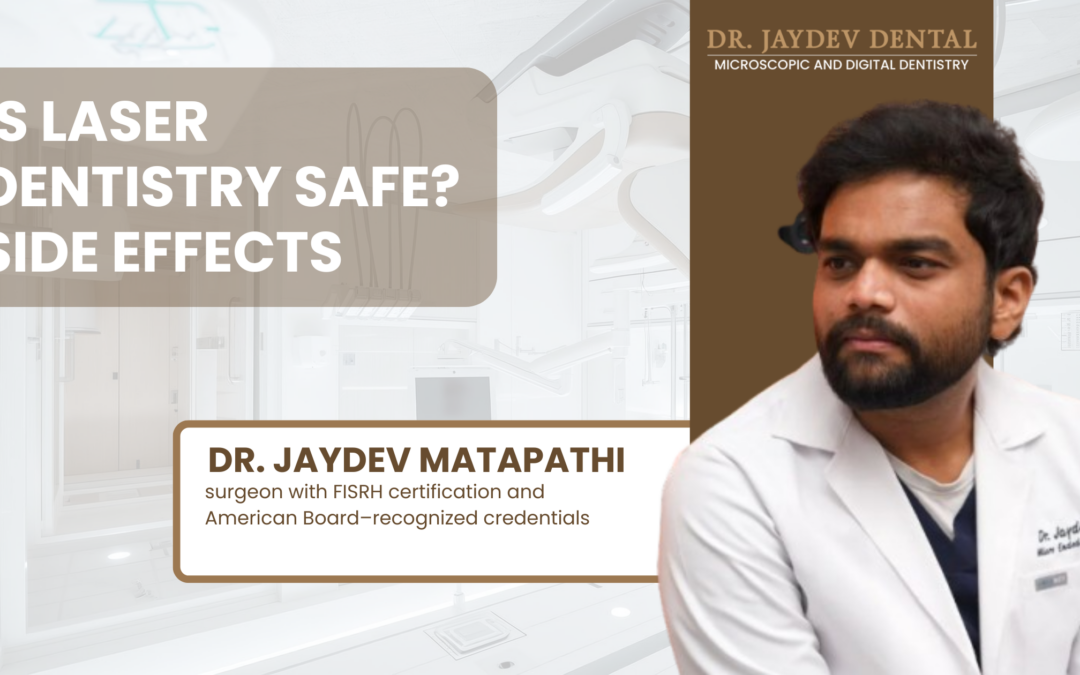
Laser dentistry is safe in trained hands, on the right clinical case. Dentists use lasers to treat gum disease, remove decay, whiten teeth and perform soft-tissue procedures, often with less bleeding and a faster recovery than a conventional drill or scalpel. Side effects do occur, but they are generally mild. Localised soreness, minor swelling, or a day or two of sensitivity. The risk increases when the laser is misapplied or operated by someone without adequate training and clinical experience in laser procedures.
According to Dr. Jaydev, highly experienced in laser dentistry in Hyderabad, laser procedures seal blood vessels as they work, which reduces bleeding, lowers infection risk, and makes recovery significantly more comfortable than conventional drill or scalpel methods.
Want to know if you are a suitable candidate for laser dental treatment?
Why Is Laser Dentistry Considered Safe?
Most of it comes down to precision. The laser hits only what needs treating.
Precise targeting: It works on a tiny spot and leaves the healthy tissue beside it alone. Far less collateral damage than a drill.
Less bleeding: On soft tissue the beam seals small vessels as it cuts, so gum work barely bleeds and heals cleaner.
Lower infection risk: The heat sterilises as it goes. Fewer bacteria reach the spot being treated.
Gentler recovery: Often no stitches, often no needle, and the soreness afterwards stays mild.
Done right, it usually beats the old way for comfort. That’s why laser-assisted teeth whitening suits people who want fast results, minus the harsh scraping.
What Side Effects Should You Expect?
Real, but small. Most of it fades inside a day or two.
Mild soreness: The gum or tooth can ache once the numbness lifts. A normal painkiller usually sorts it.
Sensitivity: Teeth might twinge with hot or cold for a bit, more so after whitening or decay removal.
Gum swelling: Soft-tissue work can leave things puffy and red for a few days, then it settles.
Rare burns: In the wrong hands a laser can scorch nearby tissue. Which is the whole reason skill matters.
None of this should scare you off, not if the dentist knows the kit. For a closer look at one of the most common laser applications, this guide on laser gum treatment covers what it involves.
Why Choose Dr. Jaydev Dental ?
Dr. Jaydev trained in the UK and holds an MDS with dual qualifications from the Royal College of Surgeons in Ireland and Glasgow. Laser dentistry is only as precise as the clinician behind it, and his background in microscopic endodontics means working on small targets with exacting control isn’t new territory.
Most laser complications trace back to the wrong setting, the wrong case, or not enough training. None of those tend to be the issue here. Patients come in nervous about lasers and leave wondering what the concern was.
Frequently Asked Questions
Is laser dentistry painful?
No, most procedures need little or no anaesthesia and feel quite comfortable.
Are dental lasers safe for children?
Yes, when used by a trained dentist, lasers are safe for kids.
Do laser side effects last long?
No, mild soreness or sensitivity usually clears within a day or two.
Can lasers replace the dental drill?
Sometimes, lasers handle many procedures, though not every case suits them.