
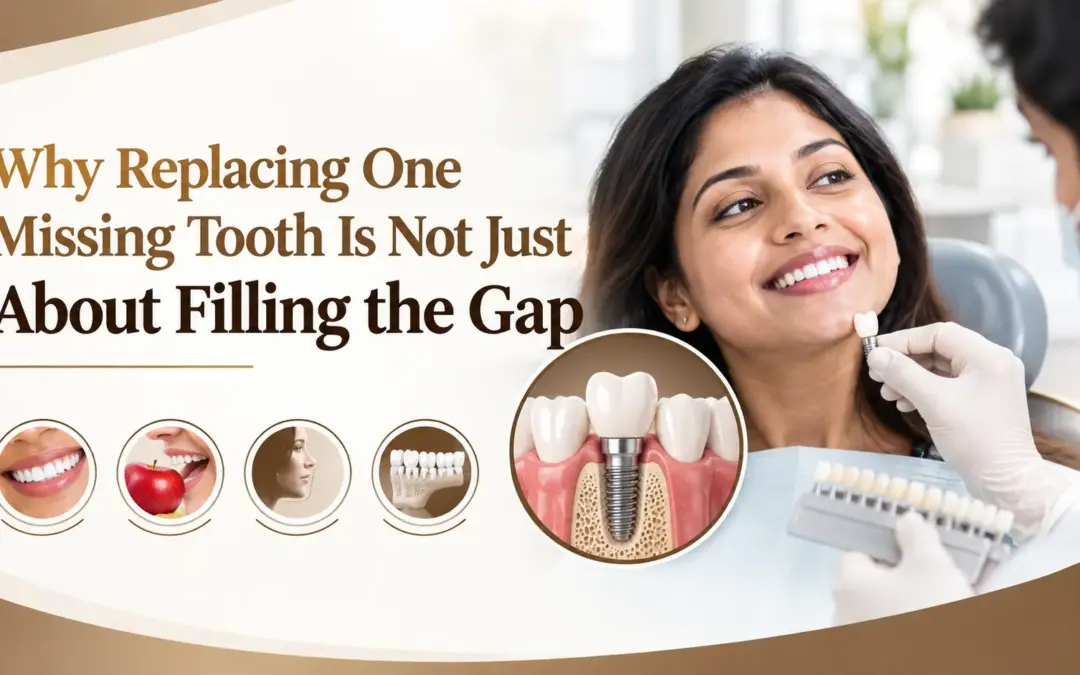
If you’ve lost a tooth, especially a back tooth that isn’t visible when you smile, it can be easy to overlook the gap. If there’s no pain or noticeable change in appearance, you may wonder whether replacing it is necessary.
Here’s the thing though, your teeth don’t work as separate, standalone pieces. They’re all part of one connected system, and losing one tooth can change how the rest of your teeth function and interact.Sometimes the change is slow and easy to miss. Sometimes you don’t even notice until a dentist points it out years down the line.
“A missing tooth may seem like a small concern, especially if it doesn’t affect your smile. But over time, it can change your bite, put pressure on neighbouring teeth, and contribute to bone loss.” Dr. Jaydev Matapath
So in this article, we’ll get into what actually happens once a tooth goes missing, why the teeth around it don’t just stay put, whether bone loss is a real risk, and what your options look like once you’re ready to fix it, including what a single tooth implant procedure actually involves.
Have a gap you’ve been putting off dealing with? A quick check-up can tell you exactly where things stand.
What Happens When You Lose Just One Tooth?

Losing a tooth feels like a single event. Something happens, the tooth is gone, and that’s that. But for your mouth, it’s really the beginning of a slow, ongoing adjustment.
A few things tend to happen gradually after a tooth is lost:
- You start chewing more on the other side, without really thinking about it, which puts extra pressure on those teeth over the years
- The teeth next to the gap lose some of their natural support and begin to lean or drift toward the space
- The jawbone underneath starts to lose density, since it no longer gets the stimulation a tooth root normally provides
- Eventually, if the gap sits untreated long enough, it can even change the shape of your face slightly in that area.
Why Do the Neighbouring Teeth Start Moving?
Teeth aren’t fixed in place forever, they respond to the forces around them, and removing one tooth throws that balance off. The teeth on either side lose support and start tilting into the empty space, while the tooth opposite can grow slightly longer with nothing there to stop it. The result is usually a bite that no longer sits right, tighter gaps that are harder to clean, and sometimes jaw discomfort as everything compensates. In some cases the shifting is enough that orthodontic treatment is needed before a replacement tooth can even go in. It might look like one small gap, but your mouth treats it as a disruption, whether you address it or not.
Can a Missing Tooth Cause Bone Loss?
Yes, and it’s probably the least talked-about consequence of losing a tooth.
Why it happens:
- Your jawbone stays strong because of the pressure it receives every time you bite and chew, transmitted through the tooth root
- Once a tooth is gone, that stimulation disappears from that specific spot
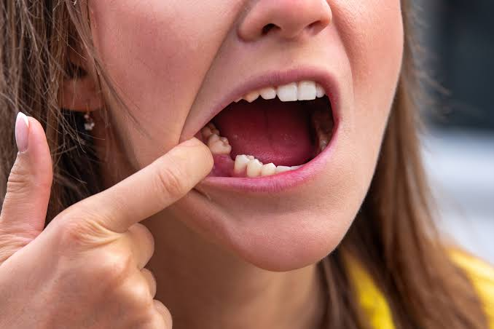
- The body starts treating the bone there as unnecessary and slowly begins breaking it down, a process dentists call resorption
How fast it progresses:
- Bone changes can begin soon after tooth loss, with significant changes often occurring during the early healing period. The extent of bone loss varies from person to person.
- The process continues gradually after that if nothing is done about it
- This is also why people who’ve gone a long time without replacing a tooth sometimes need a bone graft before an implant can even be placed, there may not be enough bone volume to support an implant safely, and a bone graft may be recommended in some cases.
What it leads to over time:
- Can gradually change the shape of your jaw and face
- Weakens the support around neighbouring teeth
Can reduce the available bone support for some tooth-replacement options over time
Not sure if bone loss has already started? It’s worth having it looked at.
What Are the Options for Replacing One Missing Tooth?
The reassuring part is that a single missing tooth is very treatable. Depending on your budget, your bone health, and how long the gap has been sitting there, you’ll generally have three options worth considering.
- A dental implant can provide a stable, long-term way to replace a missing tooth when you’re a suitable candidateA small titanium post goes into the jawbone to act as an artificial root, and a custom crown is fitted on top to match the rest of your teeth. It doesn’t need support from the teeth next to it, and since it sits in the bone like a natural root, it also helps prevent the kind of bone loss we talked about earlier.
- A dental bridge uses the two teeth on either side of the gap as anchors to hold the replacement tooth in place. A bridge can provide a fixed replacement without implant surgery, but it typically requires the teeth next to the gap to be prepared to support the restoration.
- A partial denture is a removable option that fills the space without any surgery. A partial denture is removable and may be a suitable option in some cases, although it does not provide the same type of support to the jawbone as an implant.
There isn’t really one “right” answer here, it comes down to your specific situation. A single tooth implant consultation is usually the easiest way to figure out which option actually makes sense for you.
What Happens During a Dental Implant for One Missing Tooth?
If an implant sounds like the right fit for you, here’s a general sense of what the process actually looks like from start to finish.
- Consultation and planning
- Your dentist examines the site and checks bone density, often with a 3D scan
- This helps plan exactly where the implant should go
- Implant placement
- A small titanium post is placed into the jawbone under local anaesthesia
- This post essentially becomes the new root for your tooth
- Healing period (osseointegration)
- Over the next few months, the bone gradually fuses around that post
- This is what makes implants so stable in the long run, the implant becomes anchored to the surrounding bone through a process called osseointegration.
- Abutment and crown placement
- Once healing is complete, a small connector piece called an abutment is attached
- A custom crown, shaped and shaded to match your natural teeth, is placed on top
- The end result
- A tooth that looks and functions like your own, without touching or altering the teeth around it
- The whole process does take a few months, mostly because the bone needs time to properly integrate
- For most patients, that wait pays off. A well-placed implant can last decades, andit can help preserve the bone around the implant site without requiring the neighbouring teeth to support the replacement tooth.
Frequently Asked Questions
Is it okay to leave one missing tooth untreated?
Not really, even if it doesn’t feel urgent right now. Left alone, a gap can lead to shifting teeth, bite problems, and gradual bone loss. It’s rarely just a cosmetic concern.
Can one missing tooth affect the other teeth?
It can. Nearby teeth may drift or tilt toward the empty space, and the tooth opposite the gap can grow slightly longer over time. This often throws off the bite and makes those areas harder to keep clean.
Does a missing tooth cause bone loss?
Yes. Your jawbone needs the stimulation of a tooth root to stay strong, and once that’s gone, the bone in that area starts to shrink, often noticeably within the first year if it’s left untreated.
What is the best way to replace one missing tooth?
It really depends on your bone health and what you’re looking for, but a dental implant is generally seen as the most durable option. It doesn’t rely on the teeth around it, and it helps preserve the jawbone underneath at the same time.
Can a dental implant replace just one tooth?
Yes, this is actually one of the most common uses for implants. A single implant topped with a custom crown can replace one missing tooth without involving the teeth on either side.