
A root canal specialist is either an endodontist a dentist with two to three years of postgraduate training exclusively in root canal procedures or a general dentist with advanced endodontic training and specialist-grade equipment. The distinction matters because complex cases involving calcified canals, curved roots, missed canals, or suspected cracks require diagnostic precision that standard general practice instruments don’t support. Choosing the right specialist comes down to training, available technology, and whether their case experience matches the complexity of your tooth.
According to Dr. Jaydev, a trusted name in root canal treatment in Hyderabad, “the most common reason a root canal fails isn’t technique it’s case selection, and a clinician who takes on a calcified molar retreatment without a microscope and CBCT imaging is working blind regardless of how experienced they are.”
Been told your root canal needs retreatment or that your tooth is difficult to save?
What Qualifications and Technology Should a Root Canal Specialist Have?
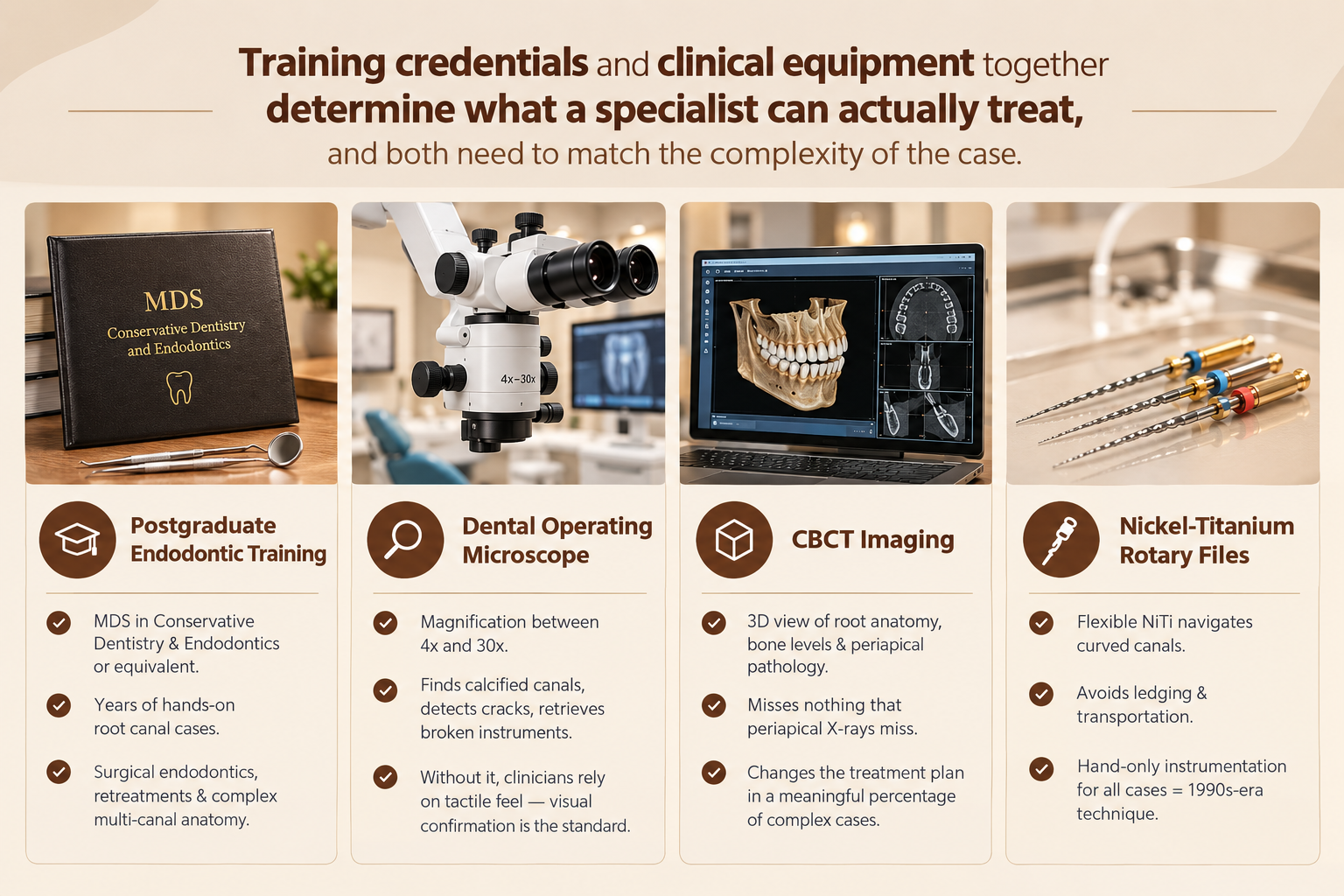
The right specialist combines all of these, and patients researching options for a difficult case will find a clear breakdown of what each technology contributes at the root canal treatment clinic in Hyderabad.
What Questions Should You Ask Before Choosing a Root Canal Specialist?
The right questions before booking separate a clinician who’s equipped for your case from one who isn’t and won’t tell you upfront.
- Do You Use a Microscope: This single question filters out a significant portion of general dental practices for complex cases if the answer is no or only sometimes, that clinic isn’t the right choice for retreatment, calcified canals, or any case where visual confirmation changes the outcome
- How Many Canals Does My Tooth Have: A specialist who’s reviewed your X-ray or CBCT before the appointment should be able to answer this precisely a vague response signals they haven’t assessed the anatomy thoroughly enough to plan the case
- What Happens If the Canal Is Calcified: The answer should include microscope-assisted canal tracing and ultrasonic tip access a response that amounts to “we’ll try and see” is a red flag for a case that needs confirmed capability before treatment starts
- Have You Treated This Tooth Type Before: Upper second molars and lower first molars have the highest anatomical variation and the most frequently missed canals a specialist who can discuss MB2 canals in upper molars or C-shaped anatomy in lower second molars has the case experience the question is testing for
Patients who’ve already read about microscopic root canal vs regular root canal understand exactly why these questions matter before committing to a clinician rather than after the procedure fails.
Why Choose Dr. Jaydev Dental ?
Dr. Jaydev is a specialist at the microscopic root canal treatment clinic in Hyderabad with dual postgraduate qualifications, including MDS, MFD RCSI, and MFDS RCPS from the Royal College of Surgeons in Ireland and Glasgow, bringing extensive clinical experience in complex root canal cases, retreatment, calcified canals, and surgical endodontics across a wide range of tooth anatomies.
Every case here starts with CBCT assessment where indicated, microscope-assisted access, and a pre-treatment anatomy review. Patients are told exactly how many canals the tooth has, what the difficulty level is, and what the realistic prognosis looks like before treatment begins, not after a second opinion reveals what was missed.
Frequently Asked Questions
Is an endodontist always better than a general dentist for root canals?
For straightforward single-canal teeth, no; for complex multi-canal or retreatment cases, yes.
Can a root canal specialist save a tooth that another dentist said needs extraction?
Sometimes, a second opinion with CBCT imaging frequently reveals options the first assessment missed.
How do I know if my root canal was done correctly?
A post-treatment X-ray showing complete obturation to the apex and absence of periapical pathology at review confirms it.
Does a microscopic root canal cost more than a regular one?
Yes, microscope-assisted treatment carries a higher fee reflecting the equipment, time, and clinical precision involved.