
Root canal treatment is an endodontic procedure that removes infected or inflamed pulp from inside a tooth, cleans and disinfects the canal system, then seals it with a biocompatible filling. It is indicated when deep decay, repeated dental procedures, cracks, or trauma reach the pulp chamber.
According to Dr. Jaydev Matapathi, smile design specialist in Hyderabad, Nobody wakes up needing a root canal. It’s months of a small cavity being ignored. Catch it early and the pulp survives. Catch it late and we’re cleaning the nerve out.
What is a Root Canal?
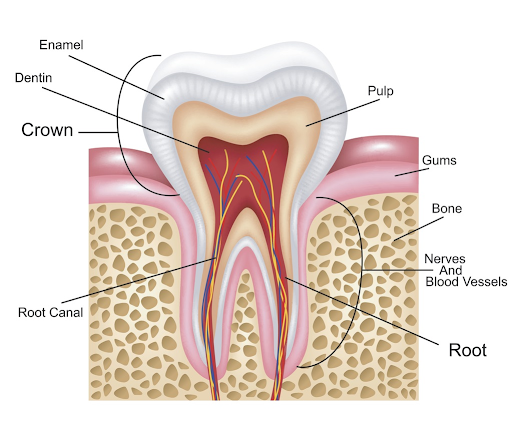
Every tooth has three layers. Hard shell outside, softer layer in the middle, and the pulp right at the centre holding the nerve and blood supply. When decay breaks past the first two and hits the pulp, the tissue starts dying. That’s where root canal comes in.
- Enamel: The armour on top. Tough but not unbreakable. Decay starts here as a tiny white spot most people miss in the mirror.
- Dentin: Sits just under the enamel. Yellower, softer, full of tiny tubes. Cavities here sting because sensation travels straight to the nerve.
- Pulp: The living core. Nerves, blood vessels, connective tissue. Once bacteria reach it, nothing heals. It has to come out.
- Root canal: The hollow passage where the pulp lives. Clean it, shape it, seal it. That’s the whole procedure in one line.
For teeth already showing deep decay, root canal treatment in Hyderabad saves the natural tooth. And for complex canal shapes, microscopic root canal treatment finds the hidden ones regular technique walks right past.
“The right time for Root Canal Treatment is when the pain is mild.”
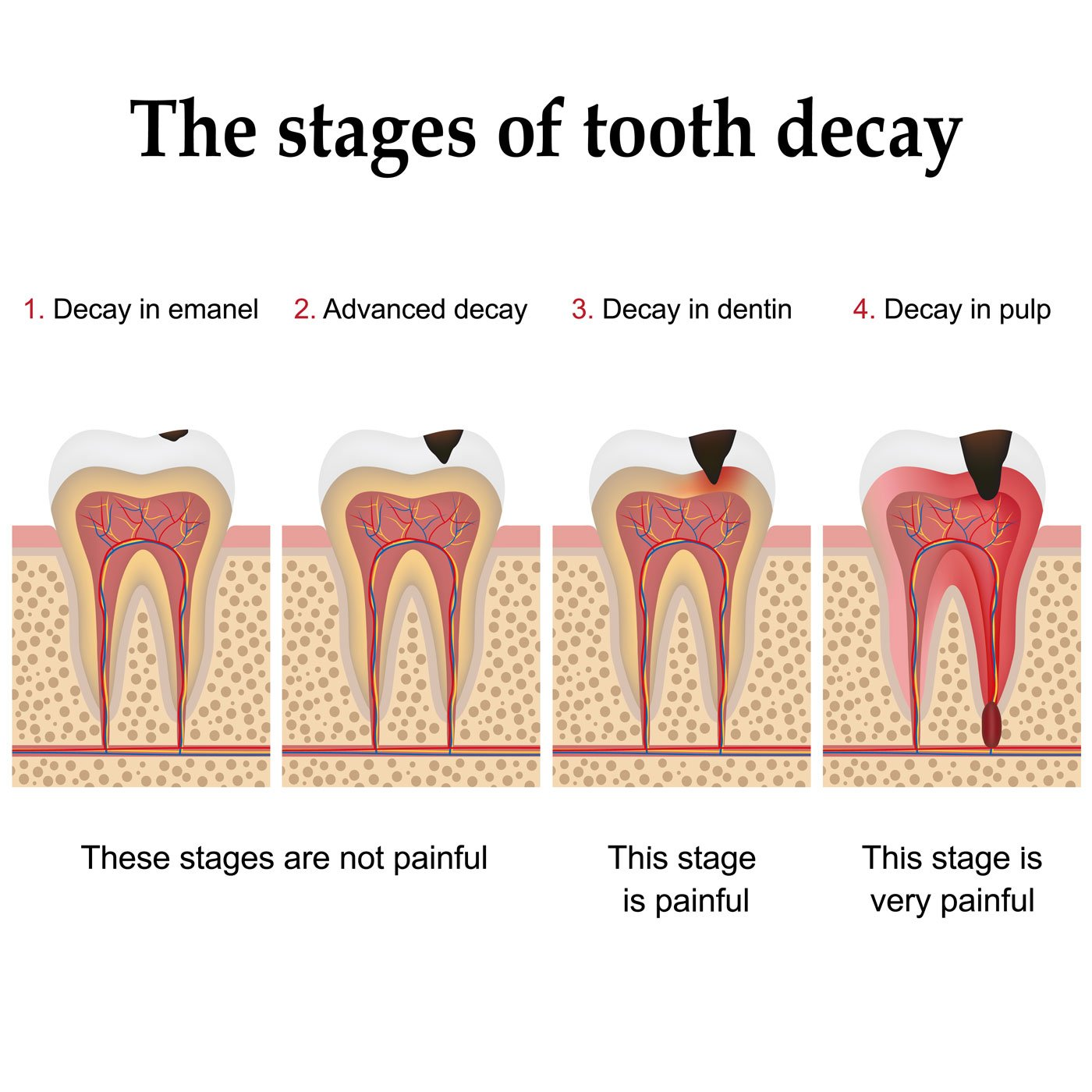
Timing’s everything. The right window is when pain is still mild. Not when your cheek’s swollen and you’re popping painkillers every four hours.
- Mild ache stage: A dull throb that comes and goes. Pulp’s inflamed but still alive. Treatment here is quick and the outcome’s predictable.
- Lingering sensitivity: Hot chai or cold water sets off pain that sticks around for half a minute. Means inflammation has progressed. Still workable.
- Pain on chewing: Sharp jab when you bite. Infection’s reached the ligament around the root tip. Wait longer and you’re looking at an abscess.
- Before pus forms: Once the face swells and pus drains, it’s an emergency. Act earlier and the whole thing is simpler, quicker, cheaper.
Still hoping the toothache will fade on its own?
The Common Causes of Root Canal
Root canal problems don’t show up overnight. They build slowly, over months, through small habits nobody thinks twice about.
- Untreated cavities: A small hole left alone for months eats right through to the pulp. Biggest cause by a mile. Completely avoidable with one six-month checkup.
- Poor oral hygiene: Brushing once a day, skipping floss, sugar between meals. Plaque parks on molars and the bacteria go to work while you sleep.
- Repeat procedures on same tooth: Filled twice, filled thrice, each time a bit more tooth comes off. Eventually there’s barely anything between the filling and the nerve.
- Cracked or chipped tooth: Popcorn kernel. Bottle cap. A fall. Even grinding at night. A hairline crack is all bacteria need.
For older treatments that didn’t hold, re-root canal treatment handles cases needing a second attempt.
Do not ignore these Signs and Symptoms
The tooth warns you. Usually for weeks. Most people nod and carry on until the pain makes decisions for them.
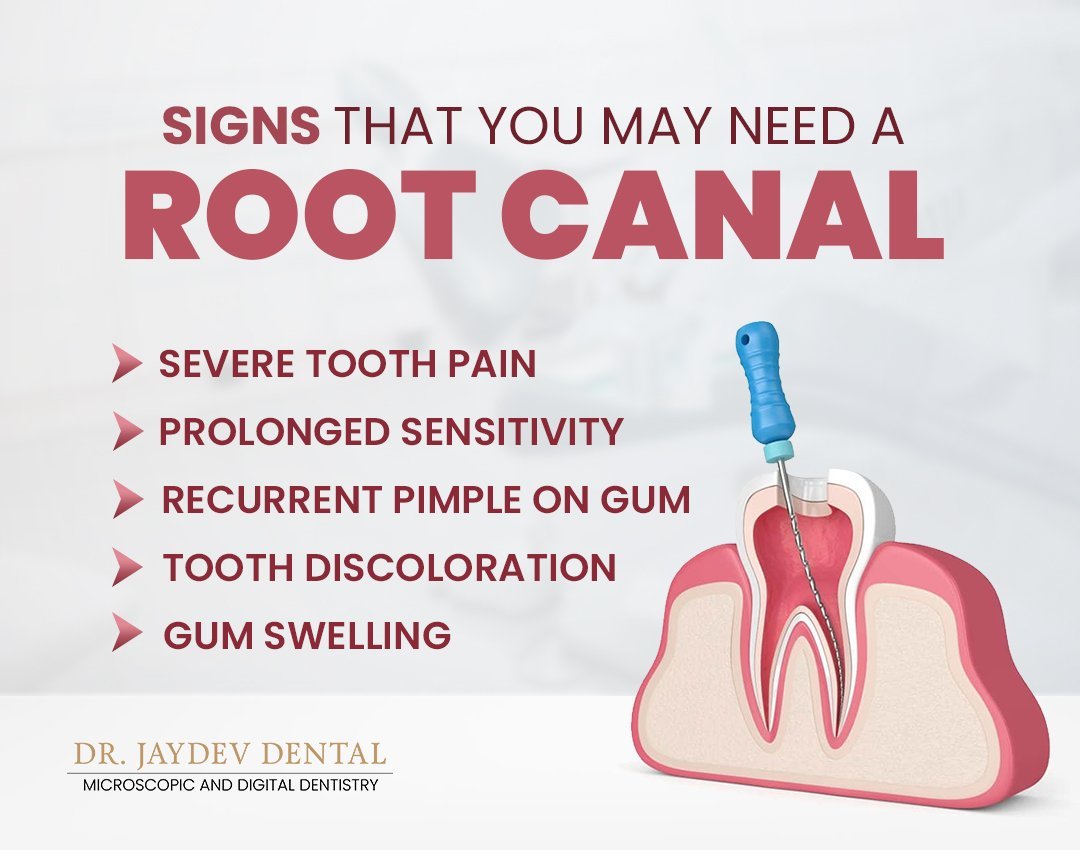
- Throbbing that won’t quit: Worse at night. Worse lying down. Pressure inside the infected pulp has nowhere to go.
- Sharp sensitivity: Hot and cold trigger a zing that lingers. Healthy teeth react for a second. An infected one keeps ringing.
- Pus bulb on gum: A small swelling near the bad tooth, sometimes draining a salty or metallic taste. That’s a sinus tract. Dead giveaway.
- Tooth going grey: Colour change against neighbouring teeth means the pulp’s already dead. No blood supply, no colour.
Tips to Prepare for Your Root Canal Treatment
A bit of prep goes a long way. The chair time feels shorter and recovery moves faster when you walk in ready.
- Ask everything beforehand: How many visits. What anaesthesia. Will you need a crown. Good dentists answer without getting irritated.
- Eat properly before: Procedure runs 60 to 90 minutes. Empty stomach plus anxiety equals lightheadedness. Don’t skip breakfast.
- Skip smoking and alcohol: Both slow healing and worsen inflammation. Stop 24 hours before and stay off another 24 after.
- Keep the day light: Soreness for two to three days is normal. Plan nothing heavy. Ibuprofen, soft food, rest.
The Root Canal Treatment procedure
The procedure runs in order. Every step matters. Skip one and the whole thing fails six months later.
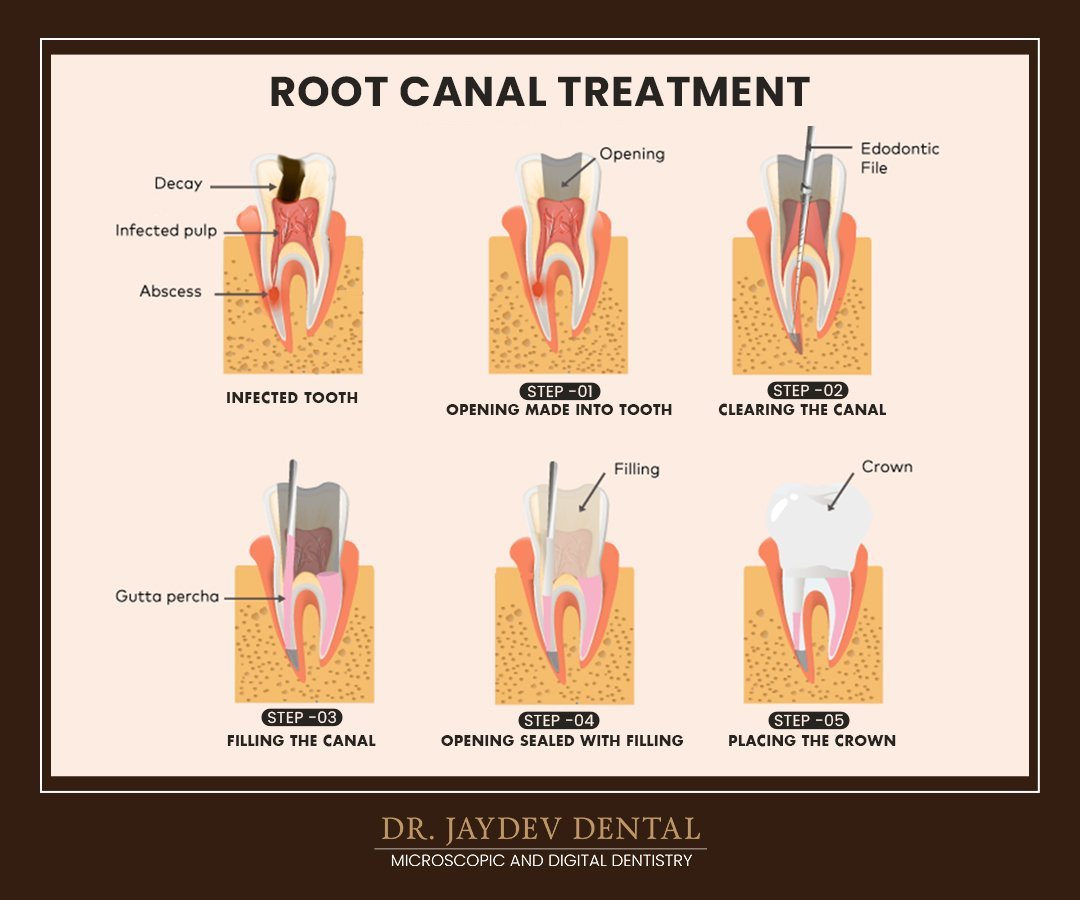
- Numbing: Topical gel first so the needle barely registers. Then the injection. Dentist tests the tooth till it’s fully numb before anything sharp comes out.
- Cleaning the pulp: Access is opened through the top of the tooth. Infected tissue comes out with fine files. Antiseptic rinse washes the rest.
- Shaping and filling: Canals get shaped to hold the seal. Gutta-percha, a rubbery biocompatible material, plugs them permanently.
- Crown placement: Temporary filling goes on first. Two to four weeks later a proper crown takes over and protects the tooth from chewing pressure.
For post-procedure protection, crowns and bridges restore full chewing strength to the treated tooth.
Benefits of Microscopic Root Canal Treatment Over Regular Root Canal
Microscopes changed everything. Not just how the procedure feels on the chair. The real difference shows up years later, in whether the tooth holds or fails.
- Better visibility: Magnification up to 25 times. Narrow canals, curved canals, the ones hiding behind the main one. All visible. Missed canals are the top reason regular root canals fail.
- Higher success rate: Microscopic RCT success sits above 95%. Standard technique around 85%. That gap is the difference between keeping the tooth and losing it.
- Less tooth removed: Precise instruments mean less healthy structure drilled away. The tooth stays stronger long term.
- Usually one sitting: When you can see clearly, you treat correctly the first time. Fewer callbacks, fewer repeat visits.
A Note from Dr.Jaydev Dental Clinic:
At Dr. Jaydev Dental Clinic, every root canal case starts with a proper diagnosis under magnification. Nothing starts till the tooth genuinely needs it. Some turn out to be deep fillings, not root canals at all. Honesty over overtreatment. Always.
Dr. Jaydev says, “Root canal is one of the safest procedures we do today. The fear patients bring in is bigger than the procedure itself. Six-monthly checkups prevent most cases from ever needing this chair.”
For any dental emergency or a second opinion on a recommended root canal, contact the clinic for an instant appointment.
Wondering if your tooth really needs a root canal or just a deep filling?
Get Every Single Answer About The Treatment
1. How long does root canal treatment take?
2. Does root canal procedure hurt?
3. Do we need to put a dental crown after the root canal?
4. What to Expect from Root Canal Treatment?
4. What to Eat and Not to Eat After RCT?
Reference links
- Indian Dental Association —https://www.ida.org.in/
- American Association of Endodontists —https://www.aae.org/