
Bad breath (halitosis) is usually caused by oral bacteria breaking down proteins on the tongue, between teeth, and in gum pockets. Less commonly, it stems from sinus issues, acid reflux, or organ dysfunction. Persistent halitosis that survives brushing needs clinical diagnosis, not just better hygiene products.
According to Dr. Jaydev, one of the best dental clinics in Hyderabad, “patients spend years cycling through mouthwashes and tongue scrapers without improvement because nobody’s identified the actual source, and nine times out of ten it’s subgingival bacteria in pockets the patient can’t reach or clean.”
Struggling with persistent bad breath that brushing and mouthwash haven’t fixed?
What Are the Primary Causes of Bad Breath?
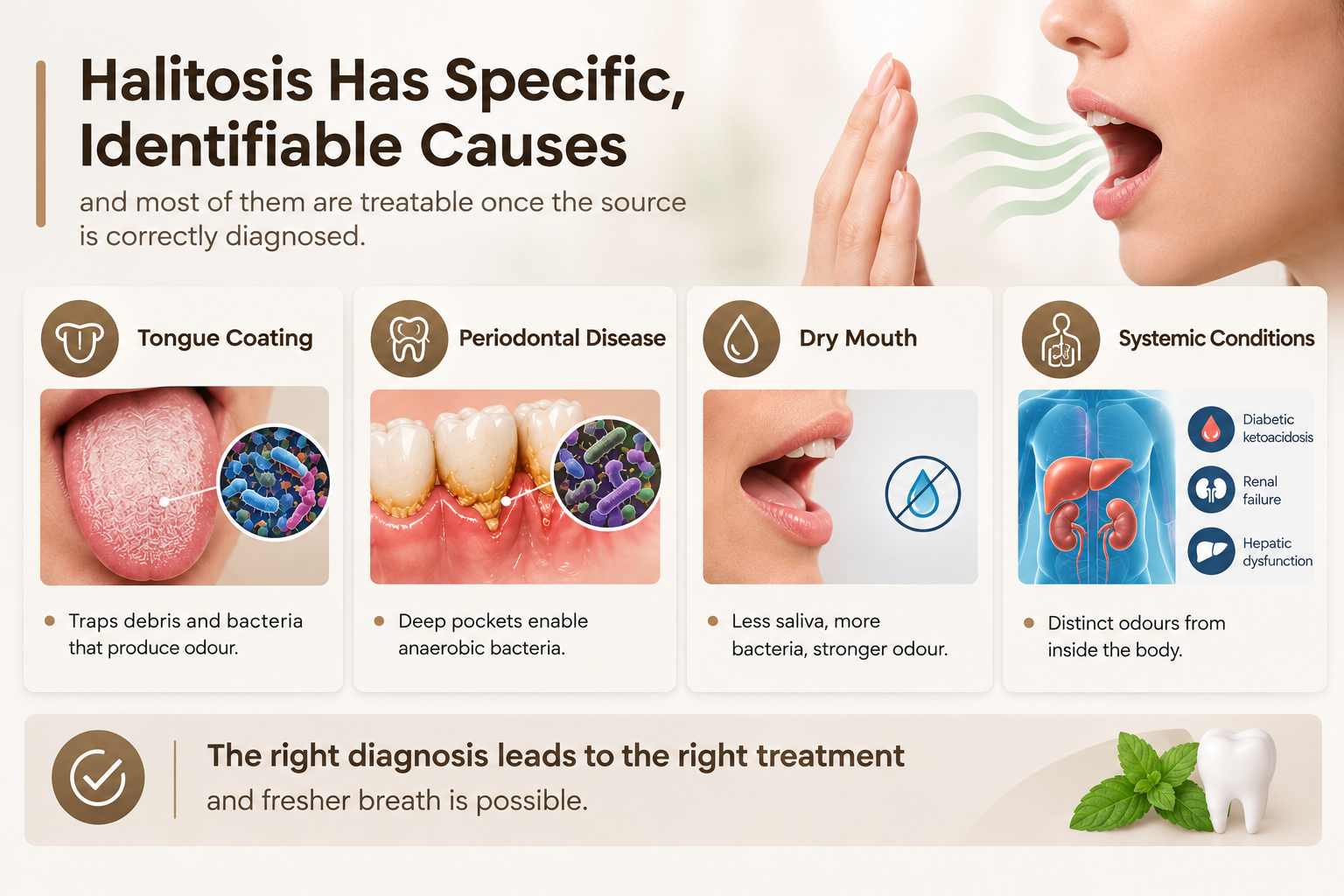
Bad breath that shifts in character often signals a systemic component that oral treatment alone won’t resolve, and patients dealing with this pattern frequently benefit from a full assessment at a smile design clinic in Hyderabad before being referred onward.
What Are the Symptoms of Halitosis and How Is It Diagnosed?
Halitosis isn’t always self-detectable because the olfactory system adapts to chronic odour, which is why many patients with significant bad breath are genuinely unaware of it.
- Persistent Taste: A stale or metallic taste on waking or after eating is a more reliable self-indicator than attempting to smell exhaled air directly
- Social Feedback: Repeated close-contact avoidance or direct comments from family members are often what brings patients to assessment rather than any symptom they identified themselves
- Organoleptic Testing: A trained examiner scores breath intensity at varying distances from the mouth and nose, distinguishing oral from nasal and systemic sources based on where the odour is strongest
- Sulphide Monitors: Halimeter and OralChroma devices measure volatile sulphur compound concentrations objectively, allowing clinicians to track treatment response over time
Accurate diagnosis changes the treatment entirely, and cases involving advanced bone loss almost always include halitosis as a presenting complaint that resolves only after the periodontal disease driving it is treated at the source. Read more about what causes calculus and how it contributes to gum disease
Why Choose Dr. Jaydev Dental ?
Dr. Jaydev is a specialist at the Smile Makeover in Hyderabad centre with advanced training in periodontal diagnosis, halitosis assessment, and full mouth rehabilitation, bringing extensive clinical experience identifying intraoral and systemic halitosis sources across patients who’ve failed repeated self-treatment attempts.
Diagnosis here goes beyond a visual check. Tongue coating scores, periodontal pocket mapping, salivary flow assessment, and sulphide monitoring are used where indicated, so patients leave knowing the actual source of the problem rather than being handed another bottle of chlorhexidine and told to brush more carefully.
Frequently Asked Questions
Can bad breath come from the stomach rather than the mouth?
Gastric sources cause halitosis in a small percentage of cases; most persistent bad breath is intraoral.
Does drinking more water help reduce bad breath?
Yes, hydration supports salivary flow which naturally suppresses bacterial activity and odour production.
Is bad breath a sign of gum disease?
Persistent sulphurous bad breath is one of the most consistent early indicators of active periodontal disease.
Can bad breath be completely cured or only managed?
Intraoral causes are fully treatable; systemic causes are managed by addressing the underlying medical condition.