
Most people assume a lost tooth just means a gap in the smile. The truth is deeper than that. Once a tooth is pulled, the jawbone that held it in place slowly starts to shrink. This shrinking, called bone loss can change the shape of your face over time and leave you looking older than your years.
Knowing why it happens, and what you can do about it, matters for both your oral health and the way you look.
“Replacing a missing tooth is not just about restoring your smile. It is about preserving the bone, supporting facial structure, and maintaining long-term oral health.” – Dr. Jaydev Matapathi
Missing a tooth and torn between a bridge and an implant?
Facial Changes Caused by Bone Loss After Tooth Extraction
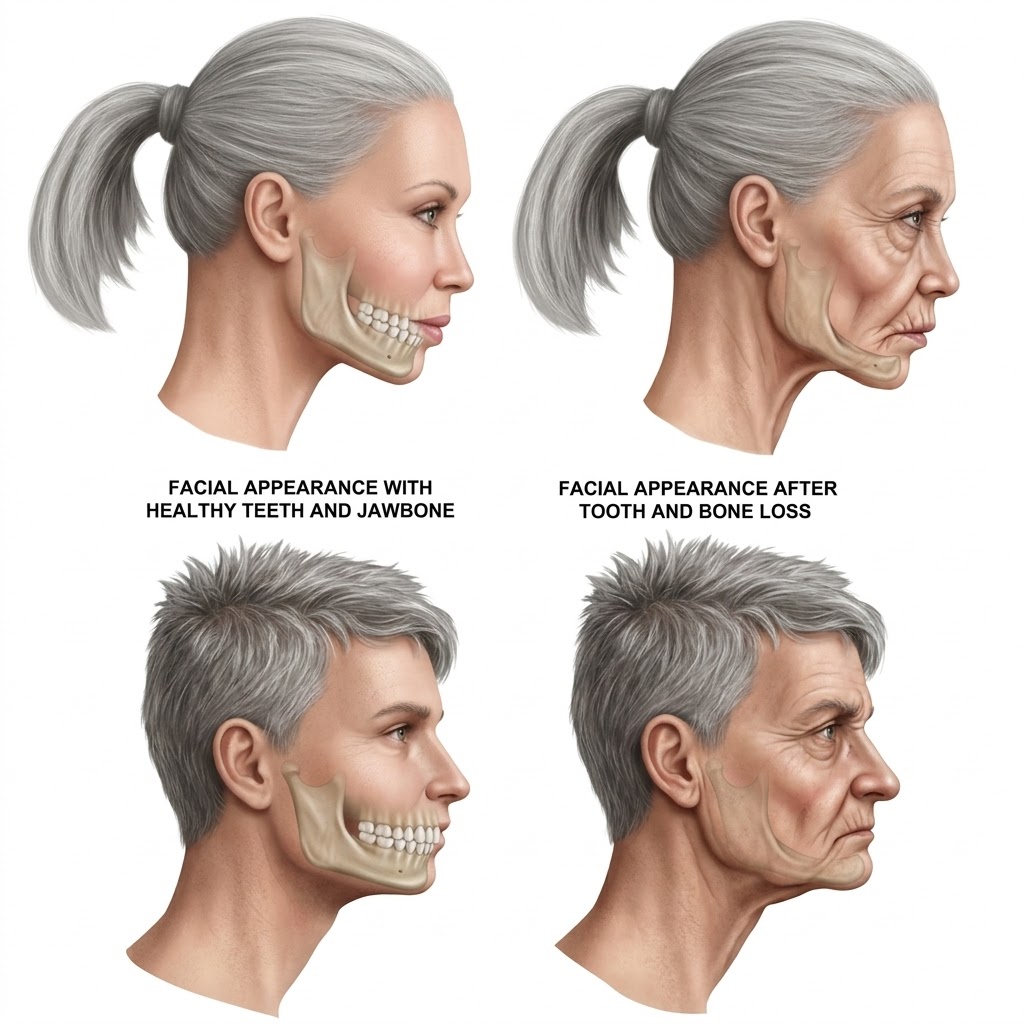
None of this happens overnight. But the changes get harder to ignore as the months and years add up.
Here’s what people often notice:
- Cheeks that look sunken once the support beneath them thins
- Lips that lose their fullness
- More wrinkles forming around the mouth
- A shorter distance between the nose and chin
- Facial muscles that begin to sag
- An overall aged or collapsed look to the face
You tend to see this in people who’ve gone several years with a missing tooth. When more than one tooth is gone, the effect on the face can be striking.
A lot of patients are genuinely surprised to learn how closely their facial shape is tied to the health of their jawbone.
Can Bone Loss Be Prevented After Tooth Extraction?
Here’s the interesting part. You can often keep bone loss to a minimum if you act early.
A few options tend to work best:
- Bone grafting after extraction: Helps the jawbone hold its natural shape.
- Timely tooth replacement: Stops those long stretches with no stimulation.
- Regular dental evaluations: Let your dentist keep an eye on bone health.
- Good oral hygiene: Keeps the gums and surrounding structures healthy.
Acting early counts for a lot, because once you’ve lost a significant amount of bone, getting it back can mean extra procedures.
Early treatment can help preserve your bone and your smile. Book a consultation with Dr. Jaydev Dental today.
How Dental Implants Help Preserve Facial Structure
Dental implants are considered one of the most effective ways to replace missing teeth, especially when the goal is to maintain jawbone health and preserve facial structure over time.
Unlike dentures or bridges, a dental implant is placed directly into the jawbone, where it works like a natural tooth root. This helps provide the ongoing stimulation the bone needs to stay active and strong, reducing the risk of gradual bone loss.
Here are some key benefits of dental implants:
- Help slow down bone loss in the jaw
- Support natural facial shape and prevent a sunken appearance
- Improve chewing efficiency and bite strength
- Offer long-lasting stability and durability
- Look and feel very similar to natural teeth
At Dr. Jaydev Dental, implant treatment is planned with equal attention to function and aesthetics. The aim is to restore missing teeth in a way that supports overall oral health while also helping patients maintain a natural, balanced facial appearance over the long term.
Restore Your Smile and Facial Structure
A missing tooth can affect both your looks and your oral health.
Conclusion
Bone loss after a tooth extraction is more than a dental issue. It can shape how your face looks and feels as time goes on. Once you understand how missing teeth and jawbone health are linked, you’re in a far better position to make smart decisions about treatment. Get care early and you can protect your facial structure, keep your bite working, and hold on to a natural-looking smile for years.
Frequently Asked Questions
Does everyone experience bone loss after tooth extraction?
Pretty much everyone loses some bone after an extraction. How much comes down to your age, your oral health, and how soon you get the tooth replaced.
Can dentures prevent bone loss?
Traditional dentures restore appearance and function, but they generally don’t give the bone the stimulation it needs to stop ongoing loss.
How much bone can be lost in the first year?
The heaviest bone loss usually happens during the first year after extraction, and especially in those first few months.
Are dental implants the best way to prevent bone loss?
Implants are widely seen as one of the most effective options, since they replace both the visible tooth and the root and keep the bone stimulated.
Can facial changes from bone loss be reversed?
Often, yes. Bone grafting and implants can restore lost support and improve how the face looks, though the right approach varies from person to person.
Which teeth cause the most noticeable facial changes when lost?
Losing several back teeth reduces facial support, while missing front teeth affect lip support and your smile. Either one can lead to noticeable changes if left untreated.