A smile can look better and work better after the same treatment, but those two outcomes aren’t automatic partners. Whitening changes colour, for example, yet does not move teeth. Clear aligners can straighten teeth and may also correct the way opposing teeth meet. Crowns, veneers or a full-mouth rehabilitation can rebuild worn teeth and reshape biting surfaces, provided the bite is carefully planned.
“A beautiful smile should also feel comfortable and function well. When planning cosmetic dentistry, I always consider how the teeth come together—not just how they look.”— Dr. Jaydev Matapathi
What Does “Bite” Actually Mean?
A person’s bite, or occlusion, refers to how the upper and lower teeth meet when the mouth closes and moves against each other during chewing. A “bad bite”, or malocclusion, means the teeth or jaws do not meet in the usual relationship. The American Dental Association explains that orthodontics is concerned with correcting bad bites and that a healthy bite supports biting, chewing and speech.
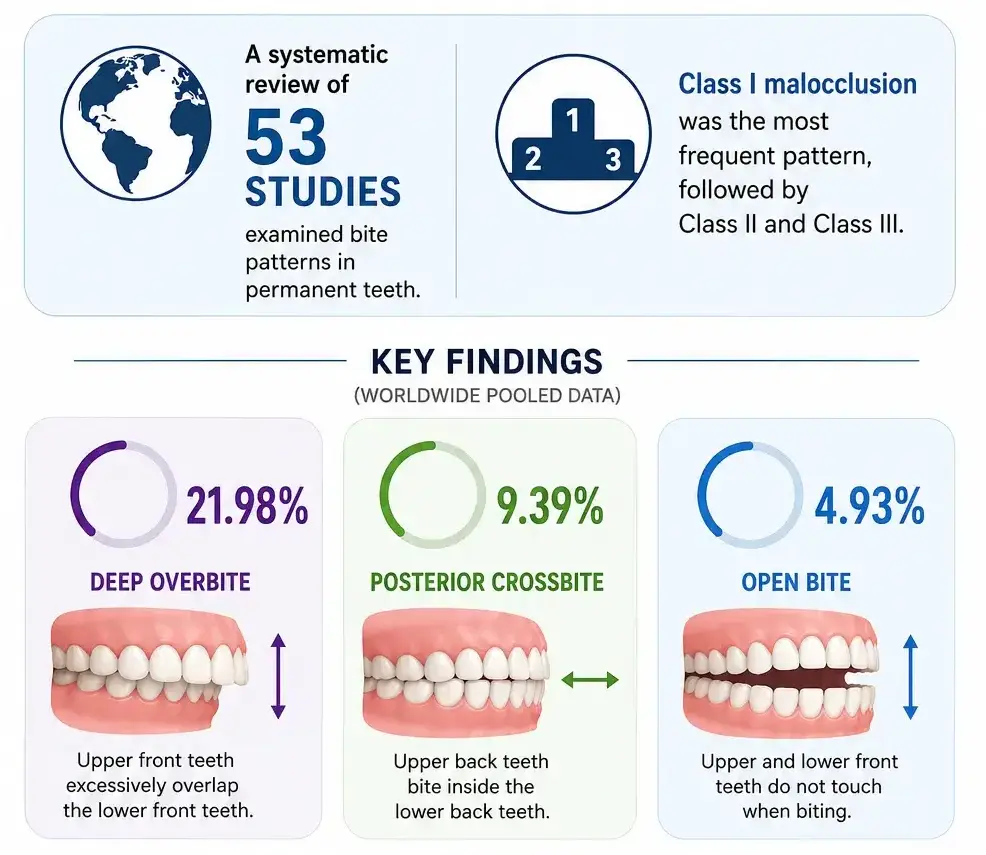
Bite differences may appear as crowded teeth, excess overlap, an open bite where some teeth do not touch, or a crossbite where certain upper teeth sit inside the lower teeth. They may reflect differences in tooth position, jaw relationships, or both. NHS England describes orthodontics as the specialty that assesses and treats the development of the teeth, occlusion, malocclusion and facial differences.
Four ways a bite can feel “off”
How Common Are Bite Problems?
Bite problems occur frequently, but vary according to studies being conducted at different age groups, different populations and different definitions.
How Can Cosmetic Dentistry Improve Function?
Clear Aligners: Moving Teeth Into a Healthier Relationship
Orthodontic treatment is not simply concealing tooth position; it actually moves teeth. It is used to correct tooth alignment, with the type of treatment depending on the nature and severity of the malocclusion. When planned correctly, it can improve both the appearance of the smile and its function.
Veneers: Mainly Cosmetic, With Limited Functional Scope
Veneers are thin, custom-made shells bonded to the front of teeth. They improve the look of chipped, stained, crooked, or misshapen teeth and can mask minor gaps but they don’t move tooth roots or correct significant jaw discrepancies. As the ADA notes, veneer treatment is also irreversible. Small contour adjustments may subtly influence how a few teeth guide movement, but veneers shouldn’t be pitched as a substitute for orthodontics when actual tooth movement is needed.
Crowns and Bridges: Rebuilding Damaged Form
A crown is a tooth-shaped cap that fits over a damaged or weakened tooth. It can restore the tooth’s shape, strength and appearance. Crowns can also be used with bridges or placed over a dental implant to replace a missing tooth. Since a crown becomes part of the biting surface, its shape and how it meets the other teeth are important for comfortable chewing.
Full-Mouth Rehabilitation: Coordinating Many Teeth
When several teeth are worn, broken, missing or heavily restored, treatment may combine crowns, bridges, implants, dental veneers or orthodontics. Here, the aim is broader than a brighter smile. The plan may also restore tooth height, chewing surfaces and balanced contacts. A 2024 literature review concluded that occlusion influences the stability and durability of restorations and emphasized occlusal analysis during planning
How directly does each option address the bite?
Bite problems occur frequently, but vary according to studies being conducted at different age groups, different populations and different definitions.
- Whitening (Colour)
- Veneers (Contour)
- Crowns (Rebuild)
- Aligners (Move Teeth)
- Full Mouth Care (Coordinate)
How Is the Bite Assessed Before Cosmetic Treatment?
- It starts with your concerns: The clinician will first ask what you have noticed about your bite, teeth, comfort, or smile.
- Your teeth and gums are checked: They’ll look for crowding, wear, cracks, missing teeth, gum problems, or restorations that may not be stable.
- Your bite is assessed: The way your upper and lower teeth meet and move is checked carefully.
- Records may be taken: Depending on what’s needed, this could include photographs, a digital scan or impressions, and X-rays.
- Oral health comes first: If orthodontic treatment is being considered, any active dental problems should generally be addressed before treatment begins.
- Bite-marking tools may be used: Articulating paper can show where the teeth touch. Digital bite sensors can provide additional information about contact timing and force.
- The tools support the assessment: These technologies may assist in the identification of bite-related problems, but the final assessment will rely on the clinical examination and judgment of the clinician.
What Treatment Path Might Be Recommended?
What May Reassure Patients?
A painless jaw click does not automatically mean your bite needs changing.
Clicking or popping is common: If there is no pain or other symptoms, it may not require treatment.
A “bad bite” is not automatically the cause: Research does not support the idea that orthodontic treatment itself causes temporomandibular disorders (TMDs).
Headaches, jaw pain or facial pain need proper assessment: Cosmetic dental treatment should not be presented as a guaranteed cure for these symptoms.
When a genuine bite problem exists: Treatment should focus on protecting tooth structure, explaining alternatives and including follow-up reviews.
The goal should be both appearance and function: Cosmetic improvements should not come at the expense of how the teeth and jaw work.
When Should Dental Care Be Urgent?
Cosmetic treatment can wait when there may be infection, trauma or another urgent problem. A dental abscess is a collection of pus caused by infection and needs urgent dental treatment. Symptoms can include severe tooth or gum pain, facial or jaw swelling, a bad taste, difficulty opening the mouth and fever.
Do not wait for a cosmetic appointment
Seek urgent dental assessment for infection or significant injury, and emergency medical help for airway or eye involvement.
Severe tooth or mouth pain that is persistent or disrupts daily life
Facial or jaw swelling, fever, a bad taste, or difficulty opening the mouth
A knocked-out tooth, heavy mouth bleeding, or significant facial injury
Emergency: difficulty breathing, speaking or swallowing, major mouth swelling, or swelling around the eye
Frequently Asked Questions
Can whitening or veneers fix a bad bite?
Not really. The whitening effect is just an uplift of the colour of the teeth and does not affect the position of the teeth. Veneers function in a similar fashion they’re intended to enhance the appearance of your teeth, instead of the way they connect. If your bite is truly misaligned, then orthodontics or a more comprehensive restorative solution is typically the best route to go.
What exactly counts as a "bite" problem?
In dental terms, that’s your occlusion, or how your upper and lower teeth fit together when your mouth is closed. If it doesn’t fit, it may look like crowded teeth, teeth that don’t align perfectly, or a slightly misaligned jaw.
Are crowns just cosmetic, or do they affect how I chew?
They do both. A crown restores the tooth’s appearance, but it also forms the surface you chew with so its shape and how it sits against the opposing tooth genuinely matter for function, not just looks.