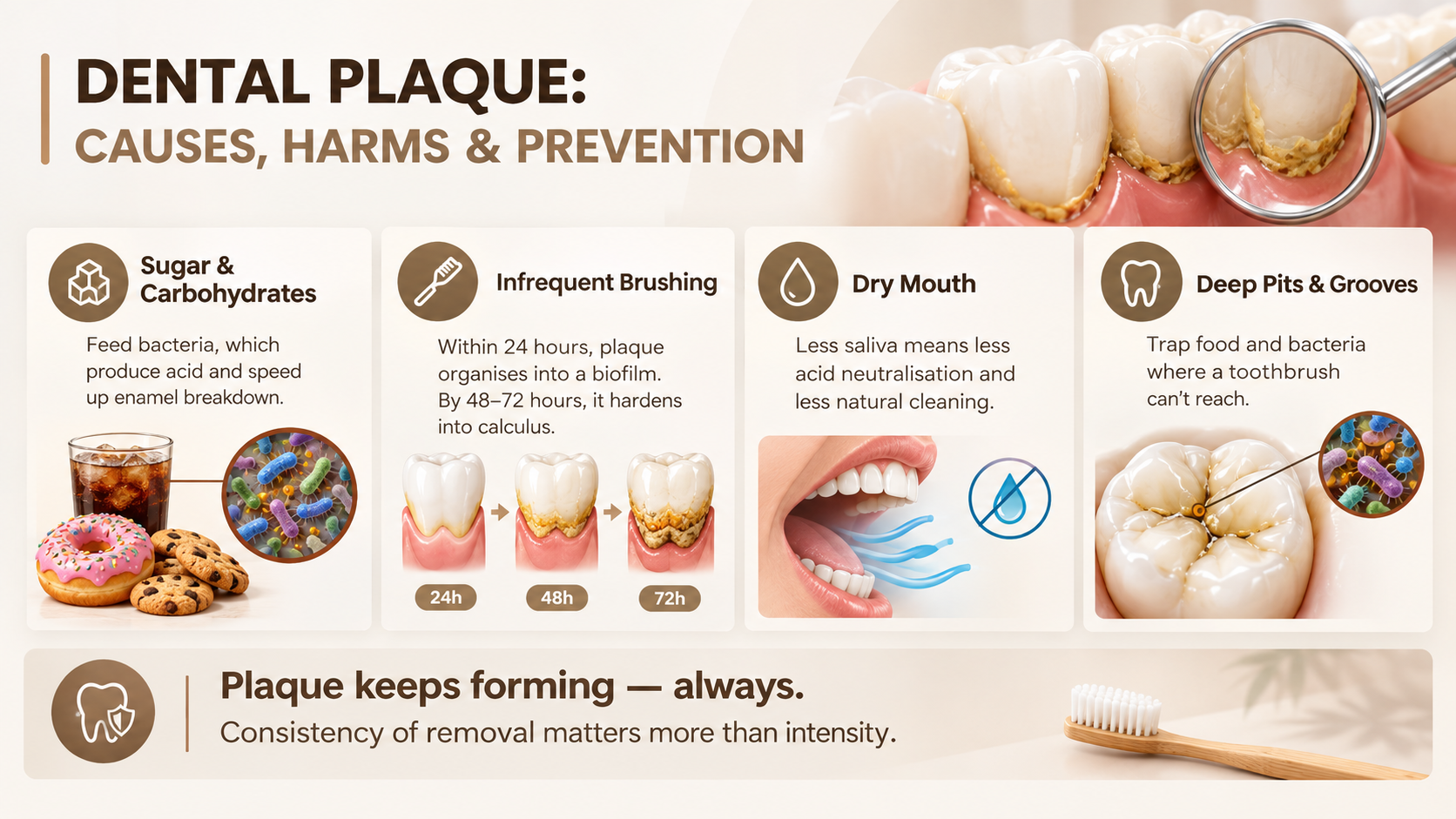
Dental plaque is a sticky bacterial biofilm that forms on teeth, along the gumline, and between teeth within hours of eating. It produces acid that erodes enamel and triggers gum inflammation, leading to cavities, gingivitis, and periodontitis if left undisturbed.
According to Dr. Jaydev, one of the best dental clinics in Hyderabad, “patients spend years cycling through mouthwashes and tongue scrapers without improvement because nobody’s identified the actual source, and nine times out of ten it’s subgingival bacteria in pockets the patient can’t reach or clean.”
Noticing persistent bad breath, bleeding gums, or visible buildup along your gumline?
What Causes Dental Plaque and Why Does It Keep Forming?
Patients who’ve been told their gums are receding or their enamel is thinning often find, at a smile design clinic in Hyderabad, that chronic uncontrolled plaque is the underlying cause that no cosmetic fix addresses without treating first.
Why Is Dental Plaque Harmful and How Can It Be Prevented?
Plaque does consistent, measurable damage at every stage and prevention depends on understanding exactly what it’s doing between brushing sessions.
- Enamel Erosion: Acid produced by plaque bacteria drops oral pH below 5.5, the threshold at which enamel begins dissolving, and repeated acid cycles across the day cause cumulative demineralisation that eventually becomes a visible cavity
- Gum Inflammation: Plaque at the gumline triggers an immune response in gingival tissue that presents as redness, swelling, and bleeding gingivitis at this stage is fully reversible, but only if plaque control improves before the inflammation becomes chronic
- Bone Destruction: Subgingival plaque that matures into a structured biofilm below the gumline activates deeper immune responses that destroy the periodontal ligament and alveolar bone, causing irreversible attachment loss that no cleaning restores
- Systemic Links: Periodontal bacteria from chronic plaque-driven infection have been identified in cardiovascular plaques, and persistent oral inflammation is associated with worsened glycaemic control in diabetic patients the damage isn’t confined to the mouth
The scale of what untreated plaque leads to is exactly why full mouth rehabilitation in Hyderabad so frequently begins with periodontal stabilisation before any restorative work can even start.
Why Choose Dr. Jaydev Dental ?
Dr. Jaydev is a leading specialist at the smile makeover in Hyderabad centre with advanced training in periodontal therapy, preventive dentistry, and full mouth rehabilitation, bringing extensive clinical experience managing plaque-driven disease across patients ranging from early gingivitis to advanced bone loss requiring surgical intervention.
Every case here starts with a plaque and calculus assessment before treatment is planned because restoring teeth without stabilising the bacterial environment that damaged them produces results that fail faster and require retreatment sooner.
Frequently Asked Questions
Can dental plaque be removed completely at home?
Supragingival plaque is removable with consistent brushing and flossing; subgingival plaque needs professional scaling.
How quickly does plaque turn into calculus if not removed?
Plaque begins mineralising into calculus within 48 to 72 hours of undisturbed accumulation on tooth surfaces.
Does mouthwash remove dental plaque effectively?
Mouthwash reduces bacterial load but doesn’t mechanically disrupt the biofilm matrix that brushing and flossing must remove.
Is dental plaque the same as tooth staining?
No, plaque is a bacterial biofilm; staining is pigment deposition on enamel from food, drink, or tobacco use.