
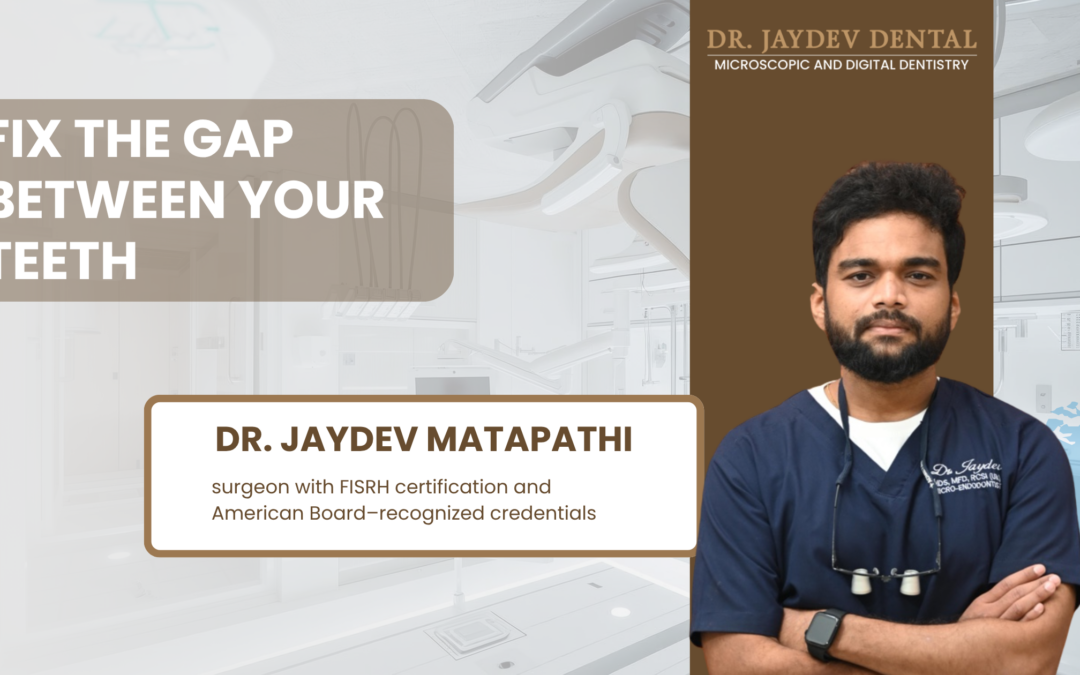
A gap between two teeth, known as a diastema, gets closed with composite bonding, porcelain veneers, clear aligners, or braces, depending on size and cause. Small gaps under two millimeters usually respond to bonding alone. Wider spaces, especially ones linked to a thick labial frenum, tooth-jaw mismatch, or gum disease, tend to need veneers or actual tooth movement instead. Not every gap needs fixing. But the ones that do need the right diagnosis before the right treatment starts.
According to Dr. Jaydev, a leading smile design specialist in Hyderabad, “A gap that’s been there since childhood behaves differently than one that showed up last year, and treating them the same way is usually how people end up unhappy with the result.”
Noticed your smile gap getting wider instead of staying put?
What Causes A Gap Between Your Teeth?

Porcelain veneers close many gap cases caused by tooth shape or size without touching the jaw or gums.
What Are The Treatment Options For Closing Tooth Gaps?
Once the cause gets confirmed, most treatment plans fall into one of four categories.
Bonding: Tooth colored resin gets shaped onto the enamel in a single sitting, which works for gaps under two millimeters but wears down faster than the rest.
Veneers: Thin porcelain shells bonded over the front surface close wider gaps while correcting shape too, though the process needs shaving a small layer of enamel.
Clear Aligners: Custom trays gradually shift the teeth toward each other over months. So unlike bonding or veneers, this actually closes the gap instead of covering it.
Braces: Traditional or ceramic brackets handle multiple gaps at once, or ones tied to crowding and rotated teeth.
None of these choices should get made from an online photo, because gum health and bite alignment decide what’s actually safe.A breakdown of gap sizes and which option fits each one is covered in this teeth gap treatment guide.
Why Choose Dr. Jaydev Dental ?
Dr. Jaydev holds an MDS along with MFD from the Royal College of Surgeons, Ireland, and MFDS from the Royal College of Physicians and Surgeons, UK. Trained in the UK and dual specialized in microscopic endodontics and smile designing, he’s handled gap cases from a single millimeter of spacing to full arch corrections over more than a decade.
Patients who arrive expecting braces sometimes leave with a veneer plan instead, because the actual cause of their gap never needed tooth movement. That’s what correct diagnosis changes, not the treatment itself.
Frequently Asked Questions
Do all tooth gaps need treatment?
No, gaps without functional or hygiene problems often need no treatment at all.
Can bonding fix a wide gap?
Bonding suits small gaps under two millimeters, not wider spacing.
Do aligners work for tooth gaps?
Yes, aligners gradually move teeth together over several months.
Will the gap come back after treatment?
It can, if the original cause like tongue thrust isn’t addressed.