Most patients come in worried they’ll lose good enamel for a better smile. The truth is, procedures like bonding and whitening don’t touch enamel at all, and even veneers only need 0.3 to 0.5 mm removed. Older, aggressive methods gave smile designing a bad reputation it doesn’t deserve anymore.
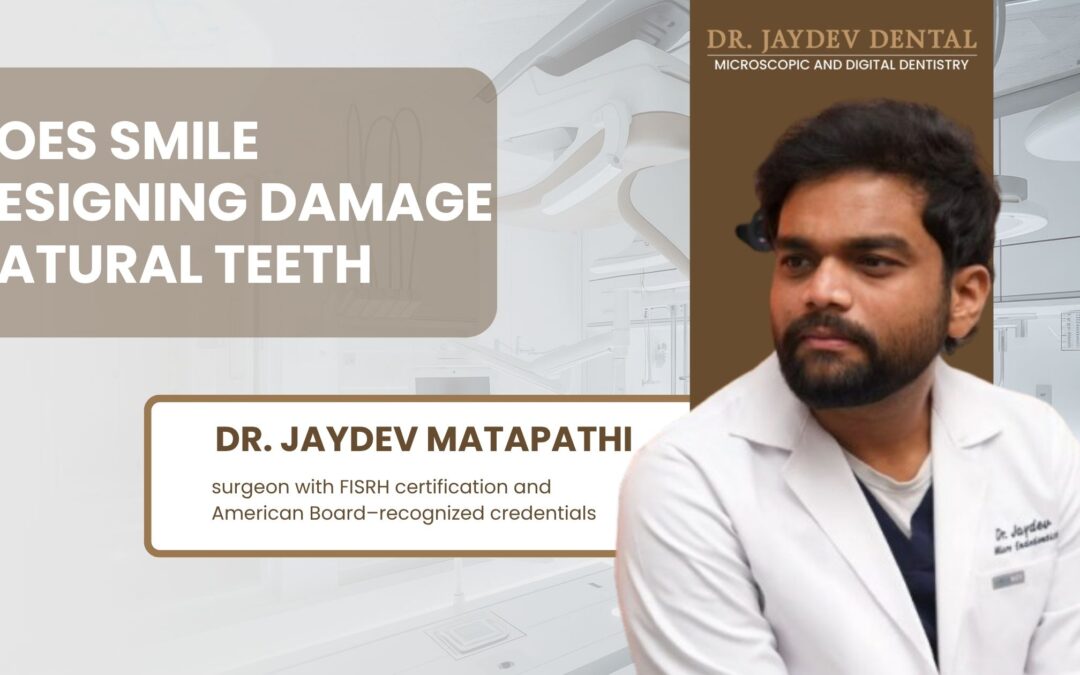
According to Dr. Jaydev Matapathi, an experienced smile design specialist in Hyderabad, Patients worry about enamel loss, but with digital planning and minimal-prep techniques we preserve far more tooth structure than was possible five years ago.
Gum pockets getting deeper despite regular cleaning?
What happens to your teeth during each procedure?
Not every smile design procedure works the same way, and that distinction matters more than most people realise before they walk in.
- Veneers trim 0.3 to 0.5 mm of enamel so the porcelain shell sits flush rather than bulging outward, which means the prep is small but it is permanent, and reversing it isn’t an option later.
- Bonding skips enamel removal entirely. Your dentist roughens the surface slightly with an acid etch, then layers resin directly over the tooth. Because nothing is cut away, it can be undone if you change your mind.
- Contouring files down uneven or chipped edges, but only when there’s enough enamel thickness to absorb it. A dentist who checks this first is one worth keeping.
- Whitening leaves enamel structurally untouched, though sensitivity to hot and cold usually sticks around for about a week after treatment.
The damage people worry about mostly traces back to dentists who filed too aggressively, not to the procedures themselves. A proper smile designing consultation tells you exactly what your teeth need and what can stay untouched.
Which procedures actually strengthen teeth rather than weaken them?
Some parts of a smile makeover add protection rather than take anything away, and that often surprises people.
- Crowns wrap around a cracked or severely worn tooth and hold the whole structure together. Without one, a cracked tooth tends to fracture further until there’s nothing left to save.
- Composite bonding goes over areas where enamel has already worn thin, sealing the exposed dentine underneath that’s causing sensitivity in the first place.
- Clear aligners don’t touch enamel at all, but correcting how your bite closes means no single tooth takes more force than it should over years of daily use.
- Gum contouring only reshapes soft tissue, not enamel, so it changes your smile line permanently without drilling or cutting anything from the tooth itself.
If you’re trying to decide between a veneer and something less invasive, our blog on smile design vs veneers lays out how those options actually compare.
Why Choose Dr. Jaydev Dental?
Dr. Jaydev Matapathi has 15 years in cosmetic dentistry with thousands of smile makeovers completed, UK-trained and working with digital smile design tools that map exactly which teeth need prep before anything is touched.
What patients consistently mention is that the digital preview changes everything. Seeing your result before any enamel is trimmed, knowing which teeth stay untouched and which ones need work, makes the decision feel less like a leap and more like a plan.
📞 Call Now: +91 40 2354 5678
Reference links
1. Porcelain veneers and enamel preservation — American Academy of Cosmetic Dentistry
2. Minimal-prep veneer techniques in clinical practice — Journal of Prosthetic Dentistry
Frequently Asked Questions
Does smile designing require shaving teeth?
Only veneers need minor trimming. Bonding and whitening leave enamel completely intact.
Can smile designing be reversed?
Bonding and whitening are reversible. Veneers and crowns aren’t, so the decision deserves time.
Is smile designing painful?
Local anaesthesia handles the procedure. Most patients feel nothing while work is being done.
Can poor smile designing cause permanent damage?
Yes. Aggressive over-filing by an inexperienced dentist can remove enamel that won’t grow back