Smile designing is basically a cosmetic treatment meant to improve the aesthetics of a healthy mouth, usually through veneers, whitening, or bonding. Full mouth rehabilitation is different, it’s a functional and structural restoration needed when there’s severe tooth loss, heavy damage, or jaw pain involved. So the simple rule is this: smile designing for cosmetic enhancement, full mouth rehab for restorative health.
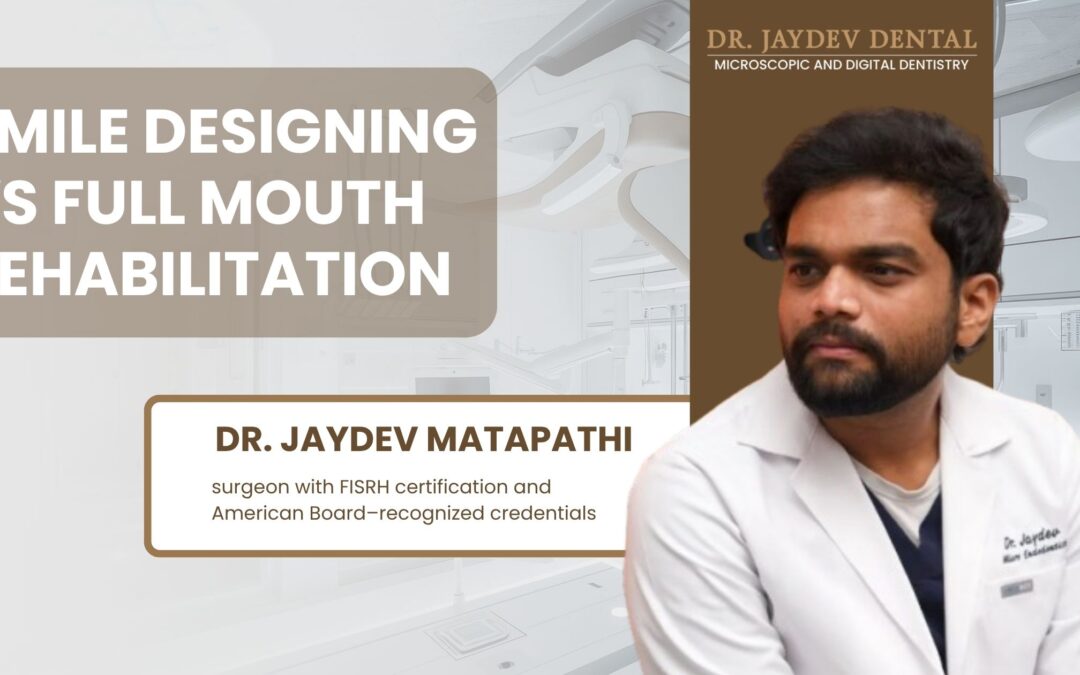
According to Dr. Jaydev, smile design specialist in Hyderabad, Most patients walking in for veneers actually need bite correction first, because cosmetic work sitting on a broken foundation rarely holds up past a couple of years.
Worn-down teeth or jaw soreness that won’t go away?
What Does Smile Designing Actually Cover?
Smile designing is about looks, not bite or function, and it only really works when the teeth and gums underneath are in good shape to begin with.
- Veneers: Thin porcelain shells stuck over the front of your teeth to hide stains, small chips, or gaps, usually done on the top six to eight teeth across two visits.
- Whitening: In-clinic bleaching that lifts years of coffee, tea, and tobacco staining, and most people pair it with home trays after, though honestly the results don’t stay forever.
- Bonding: Tooth-colored resin shaped right onto the tooth to close tiny gaps or rebuild chipped edges, pretty quick and reversible, though not as strong as porcelain for the long haul.
- Gum shaping: Reshaping the gum line with a soft tissue laser so teeth look longer and more balanced, really useful if you’ve got what people call a gummy smile.
If your teeth are structurally fine and you just want the front row looking better, a smile makeover consultation is honestly the right place to start.
When Is Full Mouth Rehabilitation the Right Call?
Full mouth rehab is reconstructive work done across multiple teeth, sometimes the jaw joints, sometimes the gums too, and it usually plays out across several months of appointments.
- Severe wear: Years of grinding or acid erosion leave teeth flat and shorter, and rebuilding them with crowns or onlays brings back both chewing height and facial shape.
- Missing teeth: When gaps mess with how you bite or speak, full mouth dental implants become the base that everything else gets built on top of.
- Bite collapse: If your jaw keeps shifting forward or sideways because back teeth are missing or worn down, the whole bite needs a reset, not just some quick patchwork.
- TMJ pain: Chronic headaches, jaw clicking, or soreness while chewing often trace back to a bad bite, and sorting that needs orthodontics, splints, and crowns all working in sync.
And if you’re still on the fence about which one you actually need, our piece on veneers and crown differences breaks it down a bit more.
Why do patients choose Dr. Jaydev Dental?
Dr. Jaydev has over 15 years in cosmetic and restorative dentistry, doing everything from single-tooth veneers to full-arch implant cases, and that range honestly matters because most patients don’t fall cleanly into one bucket or the other.
What people usually mention is how clearly the plan gets explained before anything gets touched. No upsells, no fuzzy quotes. Just an honest read on whether you need cosmetic work, functional work, or some mix of both.
Frequently Asked Questions
What's the main difference between the two?
Smile designing improves looks, full mouth rehabilitation restores function and bite.
Can I do both together?
Yes, functional work is usually done first, then cosmetic layering on top.
How long does smile designing last?
Veneers typically last 10 to 15 years with proper care and regular checkups.
Is full mouth rehab painful?
Procedures are done under anesthesia, with mild soreness managed by medication.