
Composite resin gets applied directly to the tooth, shaped by hand, hardened under a curing light, and polished; that’s dental bonding. Simple procedure, one visit, no drilling. And yes, it closes tooth gaps. Small ones, anyway. Gaps under about 2 mm between the front teeth respond well. Go wider than that, and the resin starts looking bulky because you’re adding too much material to a surface that wasn’t designed to carry it. That’s when veneers or braces become the honest answer.
According to Dr. Jaydev, an experienced smile design specialist in Hyderabad sits at the intersection of what’s fast and what’s lasting: “Knowing what bonding genuinely fixes versus where it hits its limits compared to veneers is what separates a patient who’s happy two years later from one who isn’t.”
Not sure whether bonding or veneers is the right call for your gap?
What Does Dental Bonding Actually Fix?
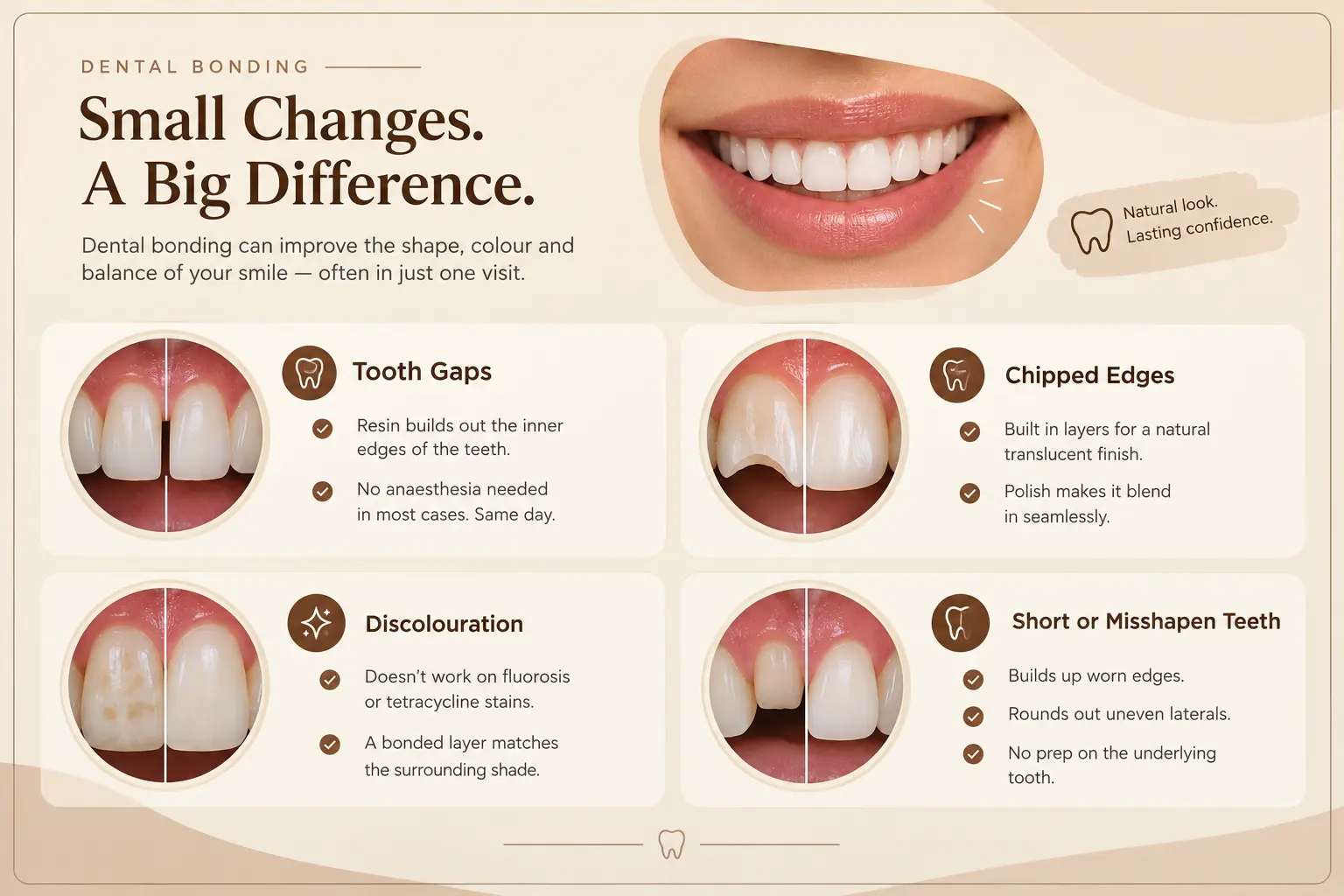
So bonding covers a lot of ground. But it isn’t built for high bite-load zones or large-surface corrections that’s where the material starts losing the argument. Veneers in Hyderabad for cases where bonding won’t hold long enough.
When Does Dental Bonding Have Limits?
Composite isn’t porcelain. It stains more, it’s softer, and it doesn’t carry load the way a ceramic restoration does. So the question isn’t whether bonding works it does; reliably, it’s whether it’s right for this particular tooth in this particular mouth.
- Gap Size: Past 2 mm, the resin widens each tooth beyond natural proportion. Patients notice within weeks the teeth look square and wide, not fixed, and polishing doesn’t correct it once the resin is set.
- Bruxism: Grinders crack bonding. Not eventually quickly. Night guards help somewhat but don’t protect composite the way ceramic does. Wrong fix for that mouth.
- Intrinsic Staining: Medication or trauma staining runs through the full dentinal thickness. The bonded layer fades as the stain bleeds through; the cosmetic result can degrade within a year even with a perfect day-one shade match.
- Multiple Front Teeth: Hand-sculpting four or more teeth produces variation in texture and translucency across the arch. A porcelain veneer set is lab-calibrated to match all of them uniformly.
Expect bonding to last 4 to 8 years. Touch-ups are easy when they come around. Can a cosmetic dental treatment also improve your bite?
Why Choose Dr. Jaydev Dental ?
Dr. Jaydev Dental MDS, MFD RCSI (Ireland), MFDS RCPS (Glasgow) is a UK-trained specialist in smile designing and microscopic endodontics. His protocol before any bonding case includes a shade audit and a bite load assessment specifically to catch the cases where bonding won’t last and a different option should be on the table. Three-time IACDE Clinical Excellence Award winner.
Patients who’ve had bonding fail somewhere else tend to get one of two things here a properly executed composite result, or a straight explanation of why veneers were always the correct call. The best dental clinic in Hyderabad for people who want the right treatment, not just the fastest one
Frequently Asked Questions
Can dental bonding close a gap between front teeth?
Yes, bonding closes small gaps up to about 2 mm using composite resin in a single visit.
Does dental bonding require removing tooth enamel?
No, bonding is applied directly to the tooth surface and doesn’t require any enamel removal.
How long does dental bonding last on front teeth?
With proper care, front tooth bonding lasts 4 to 8 years before a touch-up is needed.
Is dental bonding better than veneers for gap closure?
Bonding suits small gaps and minor corrections; veneers are better for larger gaps or multiple teeth.