Smile designing isn’t one procedure. It’s veneers, bonding, crowns, whitening, gum work, sometimes braces all of it sitting on top of whatever’s already going on in that mouth. Skip the foundation checks and the cosmetic result holds for six months. Then it doesn’t. A smile that looks great in a digital preview but ignores a bite problem or active gum disease isn’t a treatment plan. It’s just expensive.
According to Dr. Jaydev, a Dental Clinic in Hyderabad: “Two other clinics showed me digital previews straightaway; nobody had looked at my gums or checked how my teeth come together before this one did.”
Wondering whether your teeth are ready for smile designing?
What Makes Smile Designing Safe or Risky?
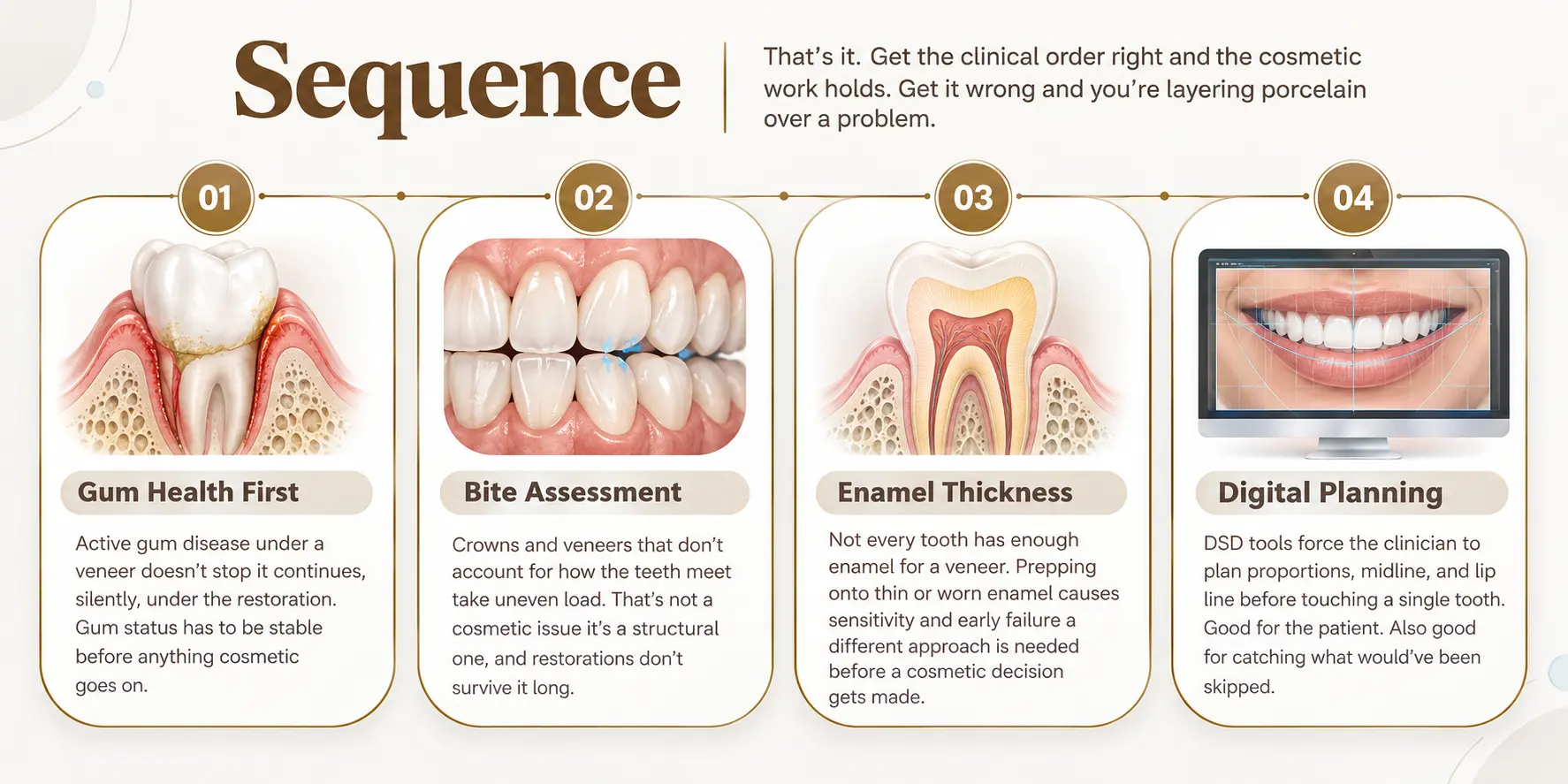
Skip any of that and the result looks fine until it doesn’t. Veneers in Hyderabad for cases where veneers are the right component of a smile plan.
Which Smile Design Procedures Carry the Most Risk?
Some components are reversible. Some aren’t. That gap matters more than most patients realise going in.
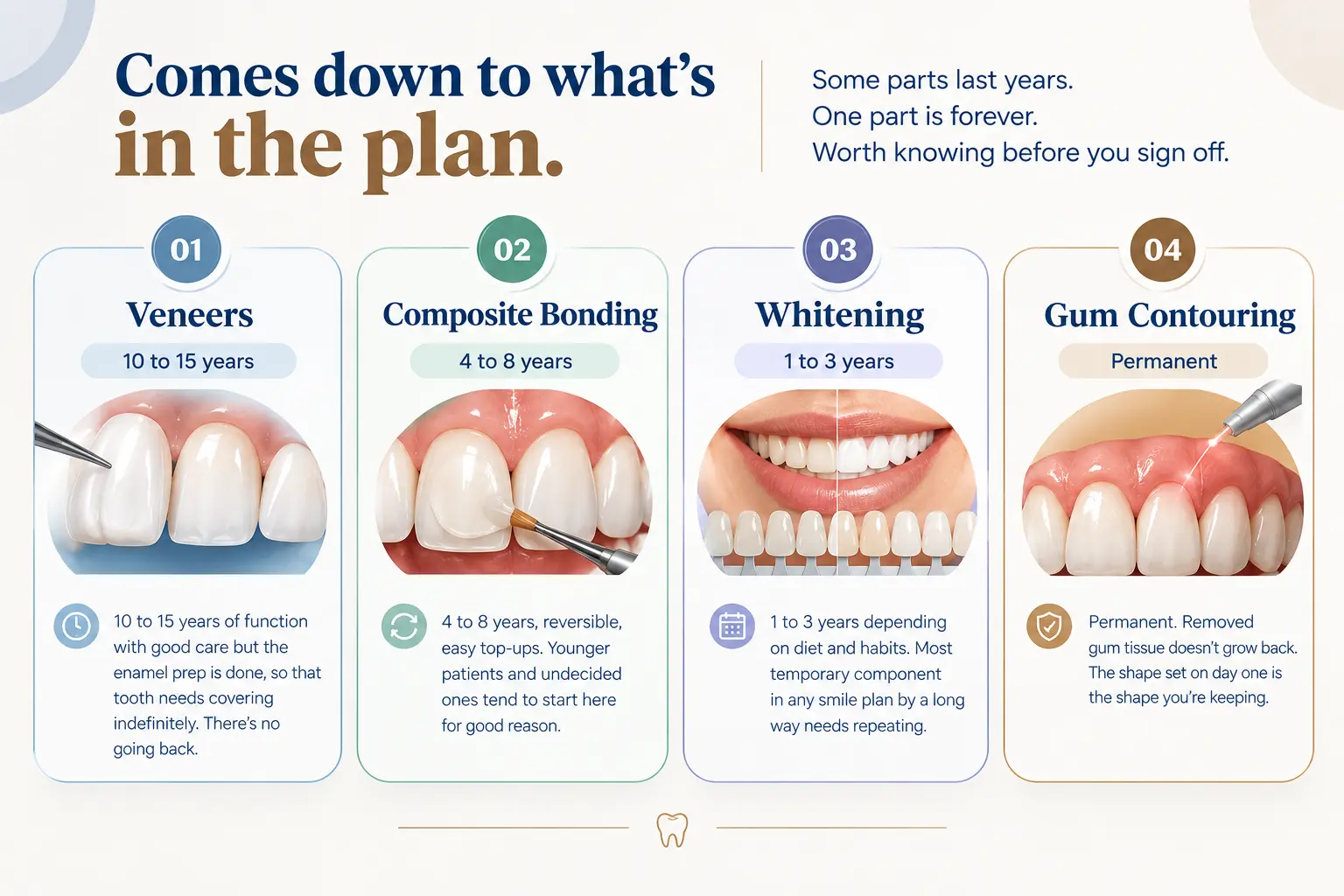
- Veneers: Enamel removal is permanent that tooth needs a restoration for life now. A clinician over-prepping to force a better fit has made a cosmetic decision into a structural one.
- Gum Contouring: Low risk when tissue is healthy and stable. But cut into inflamed gums and healing goes sideways; asymmetry that forms post-procedure is hard to undo.
- Composite Bonding: Nothing removed, fully reversible, lowest risk here. Doesn’t last as long as ceramic but it’s the right starting point if a patient isn’t sure yet.
- Crown-Based Design: More tooth reduction, pulpal risk if prep goes deep. Right call for damaged or heavily restored teeth wrong call when a veneer would’ve done the job.
The riskiest smile designs aren’t the technically complex ones. They’re the ones where nobody looked underneath first. What should you do in a dental emergency?
Is Smile Designing Permanent?
Sequence still matters. Whitening before veneers. Gum work before bonding. Bite correction before any cosmetic layer. Get the order wrong and fixing it costs more than building it did that’s why smile designing in Hyderabad starts with a sequence, not a menu.
Key Takeaways
- Gum disease, bite problems, and thin enamel need to be resolved before any cosmetic procedure starts.
- Veneer prep removes enamel permanently that tooth is committed to a restoration for life.
- Composite bonding is fully reversible and the lowest-risk starting point for undecided patients.
- DSD tools force systematic planning before any tooth is touched rereducinghe chance of costly corrections later.
- Treatment sequence isn’t a preference. Whitening before veneers, gum work before bonding, bite first always.
Frequently Asked Questions
Is smile designing a safe procedure?
Yes, when gum health, bite, and enamel integrity are assessed and stable before treatment begins.
Are veneers permanent?
Yes, enamel removal for veneers is irreversible the tooth will always need a restoration after prepping.
How long does a smile design last?
Porcelain veneers last 10 to 15 years; composite bonding 4 to 8 years; whitening 1 to 3 years.
Can smile designing damage teeth?
Poor planning or skipping clinical checks can cause sensitivity, bite problems, and restoration failure.