What Happens If You Delay Root Canal Treatment?
Delaying a root canal lets the infection spread. Starts in the pulp, moves into the bone, then reaches adjacent teeth. The nerve dies, the pain often stops, and patients take that as a sign things improved. It didn’t. A dead nerve is still a live infection. The...
Laser Whitening vs Professional Bleaching: Which Is Better?
Laser whitening and professional bleaching both use peroxide-based agents to break down stain molecules, but the mechanism that drives the reaction is different. Laser whitening uses high-intensity light to activate the gel, accelerating oxidation and reaching deeper...
Is Laser Gum Treatment Better Than Traditional Gum Surgery?
Laser treatment is the better option for mild to moderate gum disease. Less bleeding, no sutures in most cases, and the laser removes infected tissue and disinfects the pocket in the same pass. For advanced periodontitis with significant bone loss, conventional flap...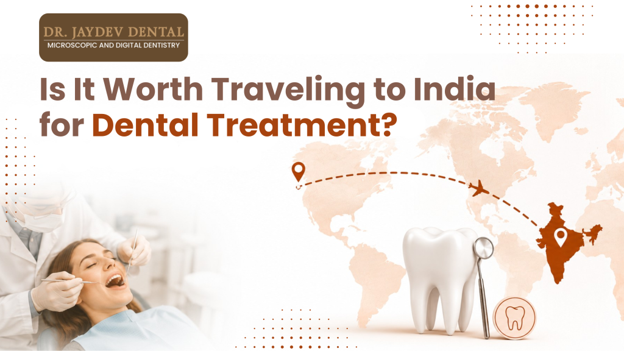
Is It Worth Traveling to India for Dental Treatment?
If you’ve been putting off a dental implant, a full mouth rehabilitation, or a smile makeover because of the cost or waiting time back home, you’re not alone. Thousands of patients from the UK, US, Canada, Australia, and the Gulf fly to India every year...
Bone Loss After Tooth Extraction & Facial Changes
Most people assume a lost tooth just means a gap in the smile. The truth is deeper than that. Once a tooth is pulled, the jawbone that held it in place slowly starts to shrink. This shrinking, called bone loss can change the shape of your face over time and leave you...Medically Reviewed by
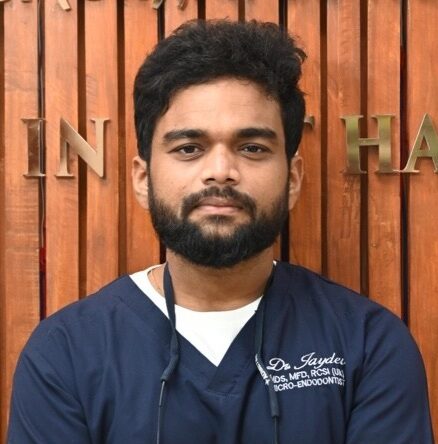
Dr. Jaydev Matapathi
BDS, MDS (Conservative Dentistry & Endodontics)
MFD RCSI (UK), MFDS RCPS (Glasgow, UK)
Member Faculty of Dentistry — Royal College of Surgeons, Ireland
Member Faculty of Dental Surgery — Royal College of Physicians and Surgeons, Glasgow Dual Super-Specialisation: Microscopic Endodontics & Smile Designing
Member Faculty of Dental Surgery — Royal College of Physicians and Surgeons, Glasgow Dual Super-Specialisation: Microscopic Endodontics & Smile Designing